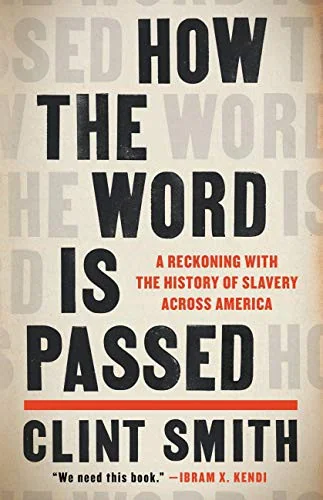
Clint Smith is an author and scholar who wrote "How the Word Is Passed," a historical exploration of slavery's legacy in America that traces connections between past and present through visits to significant historical sites and monuments. The book examines how Americans remember, confront, or avoid reckoning with this foundational and brutal history.
NOT REVIEWED YET
We haven't reviewed Clint Smith yet.
The authors readers ask for most get reviewed first.
NOT REVIEWED YET
We haven't reviewed Clint Smith yet.
The authors readers ask for most get reviewed first.
In Clint Smith's own words
Author Clint Smith joins Walter Isaacson to discuss his book 'How the Word Is Passed' and how America confronts the legacy of slavery across historical sites.
Smith explains that his book title comes from a descendant of an enslaved family at Monticello recorded during an oral history project. He felt the phrase captured how historical knowledge travels through descendants, guides, and communities outside traditional textbooks.
Monticello visitors unaware of plantation history
Smith observed tourists on a Monticello tour who were visibly shocked to learn that Thomas Jefferson enslaved hundreds of people. He notes that many people make cross-country pilgrimages to historic sites without knowing they were functioning slave plantations.
Confederate monuments versus founding fathers
Smith distinguishes between monuments to Confederate leaders and monuments to slaveholding founders like Jefferson. He argues Confederate statues belong off public property because the Confederacy was openly predicated on treason and slavery, whereas founders require full historical context.
Angola prison trivialize its plantation roots
Smith highlights that Louisiana State Penitentiary operates on an 18,000-acre former plantation where mostly Black incarcerated men perform field labor under armed guards. He was disturbed to find the prison's museum gift shop selling mugs that jokingly advertise the facility as a gated community.
The generational closeness of slavery
Smith stresses that American slavery is not ancient history, pointing out that his own grandparents were born in the 1930s under Jim Crow. He highlights that the woman who rang the bell opening the Smithsonian's African American history museum in 2016 was the daughter of an enslaved person.