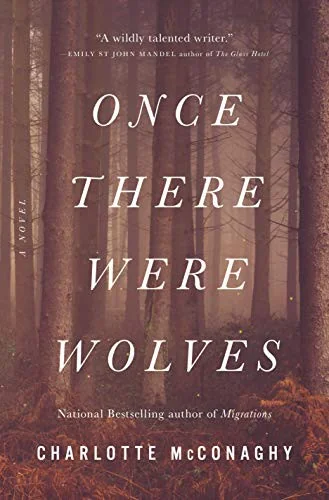
Charlotte McConaghy is an Australian novelist and screenwriter. She is the author of Migrations (2020), Once There Were Wolves (2021), and Wild Dark Shore (2025).Her novels explore subjects related to the climate.
NOT REVIEWED YET
We haven't reviewed Charlotte McConaghy yet.
The authors readers ask for most get reviewed first.
NOT REVIEWED YET
We haven't reviewed Charlotte McConaghy yet.
The authors readers ask for most get reviewed first.
In Charlotte McConaghy's own words
Author Charlotte McConaghy discusses the inspirations and themes behind her novel Wild Dark Shore on Barnes & Noble's Poured Over podcast.
McConaghy reveals her next project is an epic romance and family story set in a city where power, technology, and internet abruptly vanish. She explains that the narrative follows two families forced into the wilderness to survive and reconnect with nature.
Real ecological events inspired the seed vault
McConaghy says she conceived the seed vault plot after learning that the Svalbard Global Seed Vault flooded in 2016 when melting permafrost breached the entrance. She was also motivated by heroic efforts to save ancient Wollemi pines during Australian bushfires.
Exploring physical embodiment without modern vanity
McConaghy explains that isolating her characters on a storm-swept island stripped away screens, mirrors, and digital self-scrutiny. This allowed her to write characters who view their bodies through utility, survival, and sensation rather than aesthetic judgment.
Researching sub-Antarctic islands with an infant
McConaghy recounts taking a two-week research voyage to remote Macquarie Island with her infant child after struggling to capture the setting from her desk. Though expedition leaders initially hesitated, the smooth journey granted her firsthand experience of the island's haunting history and fearless wildlife.
Replacing passive hope with active purpose
McConaghy notes that writing about ecological dread and parenthood led her away from simple optimism toward cultivating determination. She believes surviving crisis requires giving children a sense of agency and active purpose rather than relying on empty hope.