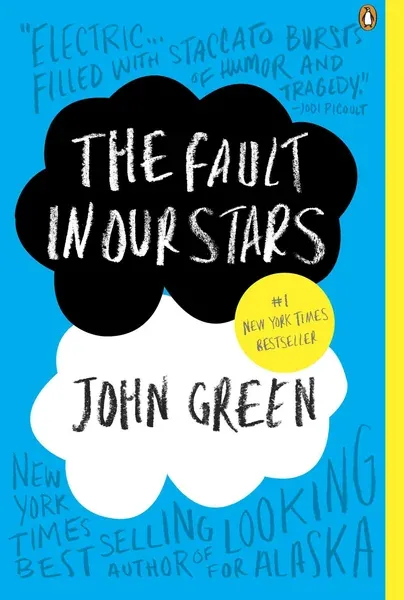
The first time you encounter Hazel Grace Lancaster, you know you're in for an emotional journey that will linger long after the final page. John Green's 2010 novel The Fault in Our Stars doesn't just tell a story about teenagers with cancer—it crafts a profound meditation on love, mortality, and what it means to live fully in the face of uncertainty. This YA contemporary fiction has sparked countless discussions about whether it's appropriate for teens, and after careful consideration, the answer isn't as simple as checking an age rating.
Readers familiar with Green's previous work, particularly Looking for Alaska, will recognize his ability to blend philosophical depth with authentic teenage voices. Where this novel distinguishes itself is in its unflinching portrayal of illness without resorting to inspiration porn or false hope.
A Love Story Written in Hospital Waiting Rooms
Hazel Grace Lancaster is sixteen, carries an oxygen tank, and has terminal thyroid cancer that has spread to her lungs. At a cancer support group, she meets Augustus Waters, a charismatic seventeen-year-old in remission from osteosarcoma who lost his leg to the disease. Their romance unfolds against the backdrop of medical appointments, experimental treatments, and the ever-present awareness that time isn't guaranteed.
Green structures the narrative around Hazel's obsession with a fictional novel called An Imperial Affliction by Peter Van Houten, a reclusive author who disappeared after writing about a cancer patient. This meta-fictional element serves as more than plot device—it reflects the human need for answers about suffering and mortality that rarely come with satisfying conclusions.
The novel's pacing moves between moments of profound intimacy and existential questioning. Green doesn't rush toward tragedy; instead, he allows readers to invest fully in Hazel and Augustus's relationship before confronting them with loss.
Prose That Balances Humor and Heartbreak
John Green writes with a voice that captures teenage authenticity without patronizing his young adult audience. His dialogue crackles with wit and intelligence—these characters speak like real teenagers who happen to be grappling with extraordinary circumstances, not like adults trying to sound young or children trying to sound wise.
The author's background working as a student chaplain in a children's hospital informs the medical details and emotional landscape without overwhelming the narrative with clinical terminology. He presents cancer as a lived experience rather than a plot contrivance, showing how illness becomes integrated into identity without defining it entirely.
Green's metaphorical language—particularly the recurring images of infinity, stars, and the titular "fault"—enhances rather than obscures meaning. When Augustus tells Hazel that some infinities are bigger than others, the mathematical impossibility becomes emotionally resonant rather than pretentious.
Hazel and Augustus: Beyond the Manic Pixie Trope
Hazel Grace Lancaster subverts the typical YA heroine archetype. She's introspective, sometimes prickly, and refreshingly aware of her own limitations. Her relationship with her parents feels genuine, marked by love strained by the impossible circumstances of raising a terminally ill child.
Augustus Waters initially seems to embody the charming, quirky male love interest, but John Green develops him beyond surface charm. His fear of being forgotten drives many of his grand gestures, revealing insecurities beneath his confident exterior. The metaphorical cigarettes he carries—putting the killing thing between his teeth but never giving it the power to kill—represent his attempt to control an uncontrollable situation.
The supporting characters, particularly Hazel's parents and Augustus's friend Isaac, avoid becoming mere plot devices. Each carries their own relationship with loss and hope, creating a community rather than just a backdrop for the central romance.
Confronting Mortality Without False Comfort
The Fault in Our Stars tackles themes that many YA novels approach with kid gloves. Death isn't presented as noble or transformative—it's devastating and random. Green doesn't suggest that suffering builds character or that love conquers all, making his portrayal of teenage romance more honest than idealistic.
The novel explores how young people create meaning in the face of abbreviated life expectancy. Hazel's concern about being a "grenade" who will hurt everyone she loves reflects genuine anxiety about the impact of terminal illness on relationships. Augustus's desire for a meaningful death that will be remembered speaks to adolescent concerns about legacy and significance.
Green also examines the performative aspects of illness—how society expects cancer patients to be either inspiring warriors or tragic victims, leaving little room for the mundane reality of living with disease.
Where Sentiment Occasionally Overwhelms Story
While Green's emotional honesty is the novel's greatest strength, it occasionally tips into manipulation. Some dialogue feels crafted more for quotability than authenticity, particularly Augustus's more philosophical pronouncements. The Amsterdam trip, while pivotal to the plot, requires significant suspension of disbelief regarding what's medically feasible for Hazel's condition.
The novel's treatment of depression through Hazel's mother could be more nuanced. While it addresses the impact of anticipatory grief on families, it doesn't fully explore the complexity of parental mental health when caring for a terminally ill child.
Green's resolution, though emotionally satisfying, wraps up certain plot threads with perhaps more closure than real life typically provides.
Worth the Emotional Investment
The Fault in Our Stars succeeds because it treats its teenage protagonists and readers with respect. John Green doesn't minimize the pain of loss or offer false comfort, but he does affirm the value of love even when it comes with guaranteed heartbreak.
For mature teens who can handle discussions about death and illness, this novel provides a framework for thinking about mortality that neither minimizes suffering nor negates hope. Parents should be prepared for conversations about terminal illness, depression, and the meaning of a life well-lived, regardless of its length.
The book's exploration of how we create meaning in the face of suffering resonates beyond its YA classification, making it worthwhile reading for anyone grappling with questions about love, loss, and what makes a life significant.
You can find The Fault in Our Stars at Amazon, Barnes & Noble, your local independent bookstore, or through digital platforms like Kindle and Apple Books.