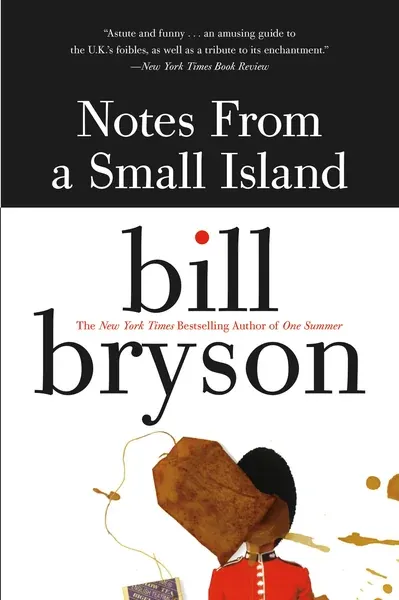
A Love Letter to British Eccentricity
Is Notes from a Small Island worth reading three decades after its publication? Absolutely. Bill Bryson's 1995 farewell tour of Britain remains one of the most charming and insightful travel memoirs ever written by an American observer of British life. What began as a goodbye gesture—Bryson was preparing to return to the United States after two decades in Britain—evolved into a masterpiece that captures the peculiar magic of a nation through the eyes of an affectionate outsider.
Bryson's journey takes him from the southern coast to the Scottish highlands, documenting everything from the incomprehensible British obsession with queuing to the mysterious appeal of Marmite. His observations feel both timelessly British and refreshingly honest, avoiding the tired clichés that plague most travel writing about the UK. Fans of The Road to Little Dribbling or A Walk in the Woods will recognize Bryson's signature blend of self-deprecating humor and genuine curiosity, though this earlier work shows him at his most sentimental and personally invested.
Bryson's Mastery of Observational Comedy
The genius of Bill Bryson's prose lies in his ability to find profound humor in the mundane. His writing style combines the precision of a journalist with the timing of a stand-up comedian, creating passages that are simultaneously informative and laugh-out-loud funny. He describes British place names with the reverence of a poet discovering new verses, turning what could be simple geographical observations into comedic gold.
Bryson's voice strikes the perfect balance between outsider curiosity and insider affection. He's lived in Britain long enough to understand the cultural nuances, yet maintains enough American perspective to find genuine surprise in everyday British customs. His descriptions of encounters with locals—from chatty Yorkshire residents to bemused hoteliers—feel authentic rather than performed, suggesting real conversations rather than constructed anecdotes.
A Gallery of British Characters
The book's strength lies not just in Bill Bryson's observations but in the colorful cast of real people he encounters throughout his journey. These encounters with locals illuminate different aspects of British regional character—each meeting adds depth to Bryson's portrait of a nation defined by its regional variations as much as its shared characteristics.
A Yorkshire farmer's pride in local history, a London cab driver's encyclopedic knowledge of shortcuts, a Scottish hotelier's matter-of-fact hospitality—these brief appearances represent the genuine warmth Bryson found beneath Britain's supposedly reserved exterior.
Nostalgia Tinged with Sharp Cultural Analysis
Beneath the humor runs a current of genuine cultural analysis that elevates the book beyond mere travelogue. Bill Bryson arrived in Britain in the 1970s and witnessed the country's transformation through two decades of social and economic change. His observations about British attitudes toward heritage, class, and modernization remain remarkably prescient, anticipating debates that would dominate British public discourse well into the 21st century.
The book captures a particular moment in British history—the mid-1990s, when the country was emerging from recession but hadn't yet embraced the New Labour optimism that would follow. Bryson's affection for British institutions like the BBC, the National Trust, and the local pub system reflects not just personal preference but recognition of their role in maintaining national identity during periods of rapid change.
Where Sentiment Occasionally Overwhelms Insight
For all its strengths, the book occasionally suffers from Bryson's tendency toward romantic idealization. His dismissal of modern British developments sometimes reads as reflexive nostalgia rather than considered criticism. The book's structure—essentially a series of loosely connected episodes—can feel episodic rather than cumulative, lacking the deeper thematic development that characterizes his later works.
Some regional sections work better than others. Bill Bryson's natural affinity for rural England and Scotland produces his most vivid writing, while his urban observations, particularly about London, feel more conventional. The book also reflects its era in ways that haven't aged entirely gracefully—certain assumptions about British social dynamics feel dated, and his perspective remains decidedly middle-class and white.
A Timeless Portrait of British Character
Despite minor limitations, Notes from a Small Island endures because it captures something essential about British character that transcends historical moment. Bill Bryson's genius lies in recognizing that Britain's true distinctiveness comes not from its grand institutions but from its endless capacity for gentle absurdity—from the persistence of Morris dancing to the elaborate etiquette surrounding tea preparation.
The book works equally well as travel writing, cultural commentary, and pure entertainment. Readers planning trips to Britain will find genuinely useful insights about regional differences and cultural expectations, while armchair travelers can simply enjoy Bryson's company as he navigates a landscape where ancient history coexists with modern pragmatism. Thirty years later, his observations about British resilience, humor, and stubborn individualism remain remarkably accurate.