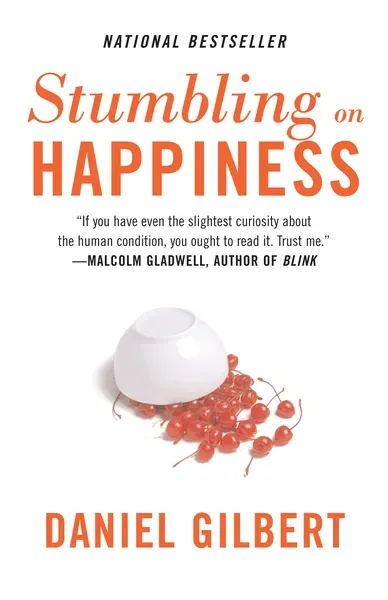
The Science Behind Our Faulty Predictions
Daniel Gilbert grounds his arguments in decades of psychological research, drawing from studies in cognitive psychology, behavioral economics, and neuroscience. He demonstrates how our brains fill in gaps in perception and memory, creating convincing but inaccurate narratives about our experiences. The book explores phenomena like "impact bias" - our tendency to overestimate how much future events will affect us - and "focusing illusion" - the way we fixate on single factors while ignoring others that influence our well-being.
The research Daniel Todd Gilbert presents is compelling and often counterintuitive. Studies show that people adapt to both positive and negative changes faster than they anticipate. Lottery winners return to baseline happiness levels within months, while those who become paralyzed report life satisfaction closer to average than anyone would predict. These findings challenge common assumptions about what we should pursue and avoid.
A Harvard Professor's Engaging Voice
Daniel Gilbert writes with the accessibility of a gifted teacher combined with the rigor of an academic researcher. His prose is conversational without being simplistic, peppered with humor that makes complex psychological concepts digestible. He uses personal anecdotes, historical examples, and thought experiments to illustrate abstract ideas, making this psychology book engaging for general readers while maintaining scientific credibility.
The author's background as a Harvard psychology professor lends authority to his claims, but he wears his expertise lightly. Gilbert acknowledges the limitations of psychological research and avoids the overconfidence that mars many popular psychology books. His willingness to question his own field's assumptions adds to his credibility.
Key Concepts That Challenge Conventional Wisdom
The book's most powerful insights concern how imagination shapes our expectations. Daniel Todd Gilbert argues that when we imagine future scenarios, we unconsciously fill in details based on present circumstances rather than accurately predicting future contexts. This leads to systematic errors in forecasting our emotional responses to career changes, relationships, purchases, and life events.
Gilbert also explores how language and culture shape our understanding of happiness itself. He distinguishes between different types of happiness and examines how our definitions influence our pursuits. The book suggests that much of what we call "happiness" is socially constructed rather than biologically determined, which has profound implications for how we make life choices.
Where the Analysis Falls Short
Despite its strengths, Stumbling on Happiness has notable limitations. Daniel Gilbert focuses heavily on laboratory studies and survey data while giving less attention to individual differences in personality, values, and circumstances. His conclusions about happiness prediction may not apply equally across different demographics, cultures, or life stages.
The book also offers more diagnosis than cure. While Gilbert effectively demonstrates that we're bad at predicting happiness, he provides limited practical guidance for making better decisions. Readers seeking actionable strategies may find this psychology book review intellectually satisfying but practically frustrating. The final chapters gesture toward solutions but don't fully develop them.
A Mind-Changing Read for Psychology Enthusiasts
Stumbling on Happiness succeeds brilliantly as an exploration of human psychology and decision-making. Daniel Gilbert's insights will fundamentally alter how you think about major life choices, from career decisions to relationship commitments. The book's value lies not in providing happiness formulas but in revealing why such formulas are illusory.
This Daniel Todd Gilbert book pairs well with Daniel Kahneman's Thinking, Fast and Slow for readers interested in cognitive biases, and with Tim Kasser's The High Price of Materialism for those exploring what truly contributes to well-being. Psychology students, anyone facing major life decisions, or readers curious about the science of human nature will find Gilbert's arguments both disturbing and liberating.
While Stumbling on Happiness won't teach you how to be happy, it will teach you why happiness is more complex and elusive than you imagined - and why that might be exactly what you need to know.