A Comprehensive Foundation for AP Success
Weseley and McEntarffer structure their approach around the College Board's current AP Psychology framework, ensuring alignment with what students will actually encounter on exam day. The authors recognize that psychology encompasses seven major areas, from biological and sensation/perception to personality and abnormal psychology. Rather than treating these as isolated topics, they build connections that help students understand psychology as an integrated science.
The research-backed approach distinguishes this prep book from competitors. Both authors bring advanced degrees and teaching experience to their methodology. Weseley's Ed.D. background particularly shows in the pedagogical structure, while McEntarffer's Ph.D. ensures scientific accuracy across complex topics like neurotransmitter function and statistical analysis.
The book acknowledges that AP Psychology students often struggle with the breadth of material. Unlike introductory psychology courses that might spend weeks on personality theories, AP students must master Freud, Jung, and the Big Five model efficiently. This reality shapes every chapter's design.
Three Practice Tests Plus Digital Resources
Practice tests remain the cornerstone of effective AP preparation, and this edition delivers with three full-length exams. The first test serves as a diagnostic tool, helping students identify knowledge gaps early in their preparation. The second and third tests function as progress checks and final preparation tools.
Each practice test mirrors the current AP format: 100 multiple-choice questions in 70 minutes, followed by two free-response questions in 50 minutes. The multiple-choice questions span all seven content areas, with heavier emphasis on biological bases and learning, matching actual exam weightings.
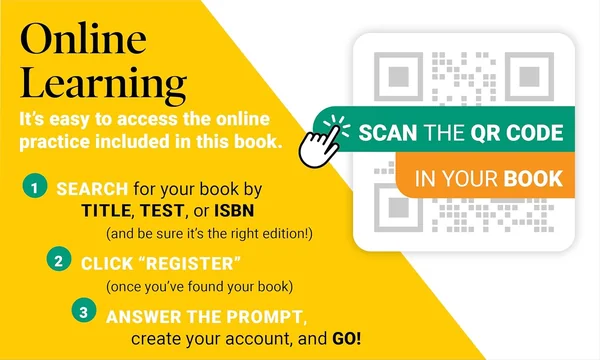
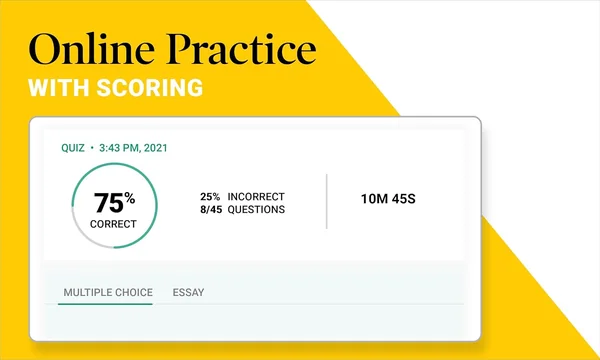
The online practice component extends beyond simple question banks. Interactive features include flashcards for key terms, video explanations for complex concepts, and adaptive practice that adjusts difficulty based on student performance. For visual learners, the digital resources prove particularly valuable when tackling neuroanatomy or research methodology.
However, the online platform requires stable internet access and may feel overwhelming for students who prefer traditional study methods. Some features work better on tablets than smartphones, potentially limiting accessibility.
Clear Explanations Meet Real Exam Challenges
The writing strikes an effective balance between accessibility and scientific precision. Complex topics like operant conditioning schedules or statistical significance receive thorough explanation without oversimplification. Students struggling with research methods will appreciate the step-by-step breakdown of experimental design, including independent variables, dependent variables, and potential confounding factors.
Case studies throughout each chapter connect abstract concepts to real-world applications. When discussing abnormal psychology, the authors present scenarios that mirror those appearing on actual AP exams. This approach helps students develop the analytical thinking required for free-response questions.
The review sections at chapter endings focus on high-yield information most likely to appear on the exam. Key terms receive clear definitions with context, not just memorization aids. Unlike some prep books that overwhelm students with excessive detail, this edition maintains focus on exam-relevant content.
Mathematical concepts receive appropriate attention without intimidating non-math students. Standard deviation, correlation coefficients, and statistical significance are explained through examples rather than formulas, making psychology's quantitative aspects more approachable.
Where the Book Excels and Falls Short
The main strength lies in comprehensive coverage without sacrificing depth in crucial areas. Students using this book alone can confidently approach every section of the AP exam. The practice tests accurately reflect current exam difficulty and question styles.
The online integration enhances rather than replaces traditional studying. Students can review difficult concepts through multiple modalities, reinforcing learning through repetition and variety. The QR codes linking print content to digital resources create seamless transitions between formats.
The primary limitation involves pacing guidance. While the book covers all necessary content, it provides minimal structure for students creating study schedules. A sixteen-week preparation timeline might overwhelm some students, while others might find eight weeks insufficient. More explicit pacing recommendations would benefit different learning styles and preparation periods.
Some advanced topics receive cursory treatment compared to introductory material. Students aiming for the highest scores might need supplementary resources for complex research methodology or detailed personality theory coverage. The book excels at building solid foundations but may not satisfy every advanced learner's needs.
The practice test explanations, while accurate, occasionally lack the depth needed for thorough understanding. Students who miss questions might understand the correct answer without fully grasping why their chosen response was incorrect.
Essential Preparation for Serious Students
AP Psychology Premium, 2026 earns strong recommendation for motivated students seeking comprehensive exam preparation. The combination of thorough content review, multiple practice opportunities, and digital enhancement creates effective learning experiences. Students who engage seriously with all components should feel confident approaching the actual exam.
This preparation guide works best for students with strong reading comprehension skills who can handle substantial content volume. Self-motivated learners will thrive with the extensive practice materials and detailed explanations. Students needing significant structure or preferring heavily guided approaches might benefit from additional resources or classroom support.
The book particularly suits students taking AP Psychology as their first advanced placement course. The clear organization and comprehensive scope provide excellent introduction to college-level expectations while maintaining focus on exam success.