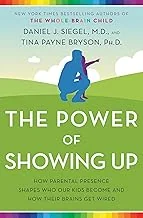
Is The Power of Showing Up worth reading for parents seeking a science-based approach to raising emotionally healthy children? Daniel J. Siegel M.D. and Tina Payne Bryson's collaboration promises to simplify the overwhelming world of parenting advice into four essential elements. But does this neuroscience-backed guide deliver practical wisdom, or does it add to the pile of parenting books that sound profound but lack actionable insight?
The answer lies somewhere between breakthrough and familiar territory. Fans of The Whole-Brain Child and No-Drama Discipline will recognize Daniel J. Siegel M.D. and Tina Payne Bryson's signature blend of brain science and compassionate parenting, but this book narrows its focus to what the authors argue matters most: simply showing up for your children in meaningful ways.
The Four S's Framework
Siegel and Bryson structure their entire approach around what they call the "Four S's" of secure attachment: Safe, Seen, Soothed, and Secure. This framework serves as both the book's strength and its limitation. The authors argue that when parents consistently provide these four elements, children develop the neural pathways necessary for emotional regulation, resilience, and healthy relationships.
The Safe element goes beyond physical safety to include emotional predictability—creating an environment where children know what to expect from their caregivers. Seen involves truly paying attention to and understanding your child's inner world, not just their behavior. Soothed focuses on co-regulation, helping children calm their nervous systems through your own regulated presence. Finally, Secure represents the outcome: a child who feels confident exploring the world because they trust their emotional home base.
What sets this framework apart from other parenting models is its grounding in attachment theory and neuroscience research. The authors don't just tell you to "be present"—they explain why presence literally shapes your child's developing brain architecture.
Bridging Science and Daily Life
The book's greatest achievement lies in making complex neuroscience accessible to exhausted parents. Daniel J. Siegel M.D. and Tina Payne Bryson excel at translating concepts like neural integration and the developing prefrontal cortex into language that feels relevant during a toddler meltdown or teenage emotional crisis.
Their explanations of how stress hormones like cortisol impact developing brains provide crucial context for why traditional punishment-based approaches often backfire. When parents understand that a child's "defiant" behavior might actually be a dysregulated nervous system seeking co-regulation, their entire approach shifts from control to connection.
However, the scientific explanations occasionally feel repetitive for readers already familiar with the authors' previous work. The core neuroscience concepts—left brain/right brain integration, upstairs/downstairs brain development—appear in slightly different packaging but cover similar ground to The Whole-Brain Child.
Practical Applications and Real-World Challenges
Where many parenting books fail, The Power of Showing Up succeeds in providing concrete strategies that parents can implement immediately. The authors include specific scripts for different situations, from bedtime resistance to sibling conflicts, all grounded in the Four S's framework.
One particularly valuable section addresses how to repair relationships after parental mistakes—what the authors call "rupture and repair." This acknowledges the reality that no parent shows up perfectly all the time, and that the repair process itself can strengthen the parent-child bond when handled skillfully.
The book also tackles modern parenting challenges like screen time, overscheduling, and the pressure to optimize every moment of childhood. Daniel J. Siegel M.D. and Tina Payne Bryson advocate for what they term "ordinary magic"—the idea that secure attachment develops through mundane daily interactions rather than extraordinary parenting performances.
Yet the book struggles with the gap between theory and reality for parents facing significant stressors. While the authors acknowledge that poverty, mental health challenges, and other systemic issues impact parenting capacity, their solutions often assume a level of emotional and practical resources that many families simply don't possess.
The Collaboration Challenge
As with their previous collaborations, questions arise about how two distinct voices merge into a cohesive narrative. Daniel J. Siegel M.D. brings decades of clinical psychiatry experience and research expertise, while Bryson contributes practical parenting wisdom and child development knowledge. The partnership generally works, but occasionally the writing feels like two separate authors taking turns rather than a true collaboration.
The book's tone aims for warm and encouraging but sometimes veers into preachy territory. Parents already struggling with guilt may find certain sections more burdensome than helpful, despite the authors' stated intention to reduce parenting pressure rather than increase it.
Beyond the Hype
The Power of Showing Up faces the challenge of standing out in an oversaturated parenting book market. While the Four S's framework provides a helpful organizing principle, the underlying concepts aren't entirely new. Attachment theory has been around for decades, and books like Hold On to Your Kids by Gordon Neufeld have covered similar ground.
The book's value lies not in revolutionary new insights but in its systematic approach to applying well-established principles. Parents seeking a comprehensive yet manageable framework for understanding their role in their child's emotional development will find this parenting book review genuinely useful.
However, parents hoping for quick fixes or specific solutions to behavioral challenges may find the approach too philosophical. The book focuses more on the underlying relationship foundation than on addressing specific parenting dilemmas, which may frustrate readers looking for immediate practical help.
Who Should Read This
The Power of Showing Up works best for parents who appreciate understanding the "why" behind parenting strategies, not just the "what." If you're drawn to evidence-based approaches and have the emotional bandwidth to reflect on your own attachment patterns, this child development book offers valuable insights.
New parents will find it particularly helpful as a foundation for building secure relationships from the start. Parents of school-age children can use it to understand and strengthen existing relationships, while those with teenagers will appreciate the sections on maintaining connection during adolescent brain development.
The book is less suitable for parents in crisis mode who need immediate behavioral interventions, or those who prefer straightforward discipline strategies without the neuroscience background.
Where to Buy
You can find The Power of Showing Up at Amazon, Barnes & Noble, your local independent bookstore, or directly from the publisher.