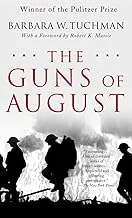
Tuchman's Narrative Mastery
What sets The Guns of August apart in World War I literature is Tuchman's background as a journalist turned historian. She constructs scenes with novelistic detail while maintaining historical accuracy, a approach that was revolutionary when the book appeared. Her prose crackles with immediacy, whether describing the German advance through Belgium or the chaotic mobilization of European armies.
Tuchman's strength lies in her ability to compress complex military and political maneuvering into clear, dramatic episodes. The Schlieffen Plan becomes not just a strategic document but a fateful gamble that shaped the entire war. She excels at showing how individual personalities—from the neurotic Kaiser Wilhelm II to the methodical General Helmuth von Moltke—influenced massive historical events.
However, her narrative focus sometimes comes at the expense of deeper analysis. Modern military historians have criticized her tendency to emphasize dramatic moments over systematic examination of logistics, technology, and broader social forces that shaped the conflict.
The Players in History's Most Fateful Month
Rather than treating historical figures as distant names, Tuchman brings the key decision-makers of August 1914 to vivid life. Kaiser Wilhelm II emerges as a conflicted figure, torn between his English relatives and German militarists. General Joseph Joffre represents French determination, maintaining calm even as German forces advanced toward Paris. Sir Edward Grey embodies British reluctance to abandon neutrality, while King Albert of Belgium becomes the unlikely hero defending his small nation's independence.
These portraits remain compelling, though some feel dated by contemporary historical scholarship. Tuchman wrote before historians had access to many private papers and military archives that have since revealed more nuanced pictures of these figures. Her characterizations, while dramatic, sometimes rely on sources that emphasized personality over institutional pressures.
The German military leadership receives particularly sharp treatment, with Tuchman highlighting their rigid adherence to the Schlieffen Plan even as circumstances changed. This focus on German inflexibility has influenced popular understanding of WWI's origins, though later historians have complicated this narrative.
Military Strategy Made Accessible
One of the book's greatest strengths is making complex military planning comprehensible to general readers. The Schlieffen Plan, with its massive wheeling movement through Belgium, becomes a character in its own right—a strategic straightjacket that trapped German decision-making. Tuchman explains how this plan's rigidity contributed to the war's escalation and ultimate stalemate.
Her treatment of the Battle of the Frontiers and the German advance toward Paris maintains tension even though readers know the outcome. The description of Belgian resistance and the German army's brutal response remains powerful, though modern scholars have provided more context about wartime atrocities and propaganda.
Where the book shows its age is in military analysis. Written in the 1960s, it lacks the sophisticated understanding of logistics, communications, and technology that characterizes contemporary military history. Tuchman focuses on command decisions and troop movements but gives less attention to how railways, telegraph systems, and supply chains shaped strategic options.
Historical Authority and Limitations
The Guns of August deserves its reputation as a landmark work that helped establish narrative history as a legitimate academic approach. Tuchman's research was exhaustive for its time, drawing on memoirs, official histories, and published documents. Her bibliography remains impressive, and her ability to synthesize diverse sources into a coherent narrative established the template for popular history writing.
However, the book reflects the limitations of 1960s historiography. Tuchman had limited access to government archives, many of which remained classified during the Cold War. Her sources skew toward published memoirs and official accounts, which often emphasized individual agency over structural factors.
Modern WWI scholarship has moved beyond the "great man" approach that dominates The Guns of August. Historians now emphasize economic factors, alliance systems, military technology, and social conditions that made war likely. While Tuchman's focus on decision-makers remains valid, it provides an incomplete picture of why Europe stumbled into catastrophic conflict.
Enduring Relevance in 2026
Despite these limitations, The Guns of August retains significant value for contemporary readers interested in World War I history. Its dramatic narrative makes the period accessible to general audiences in ways that more academic treatments cannot match. The book's insights into how small decisions can have enormous consequences remain relevant for understanding international crises.
For readers new to WWI history, Tuchman provides an engaging entry point, though it should be supplemented with more recent scholarship. The book works best when read alongside contemporary works like Christopher Clark's The Sleepwalkers or Margaret MacMillan's The War That Ended Peace, which provide broader context and incorporate decades of additional research.
The writing remains elegant and engaging, proof that historical scholarship need not be dry or inaccessible. Tuchman's journalistic background serves her well in maintaining narrative momentum and highlighting crucial turning points that shaped the twentieth century's defining conflict.