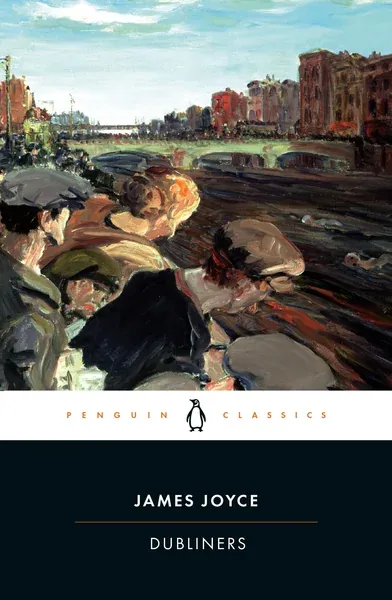
Dublin's Spiritual Paralysis Made Universal
Joyce famously declared his intention to write a chapter of moral history for his country, and Dubliners succeeds brilliantly in this ambitious goal. The collection's central theme—what Joyce called the "paralysis" of Irish life—manifests differently across fifteen stories, yet creates a cohesive portrait of a society caught between tradition and modernity, faith and doubt, dreams and harsh reality.
The paralysis isn't merely physical or economic, though those elements certainly appear. It's spiritual and psychological: characters trapped by social conventions, religious guilt, family obligations, and their own fears. Eveline stands at her window, suitcase packed, unable to board the ship that would carry her to a new life. Little Chandler dreams of literary fame while suffocating in domestic routine. These aren't uniquely Irish dilemmas—they're human ones that resonate across cultures and decades.
What makes Joyce's treatment extraordinary is his refusal to sentimentalize or condemn. He presents his characters with clinical objectivity, allowing readers to draw their own conclusions about the forces that constrain human potential. The technique influenced generations of writers who learned from Joyce how to achieve maximum emotional impact through apparent authorial detachment.
Prose That Rewards Close Reading
Joyce's writing style in Dubliners represents modernist technique at its most accessible. While later works would push language to its breaking point, here Joyce demonstrates that revolutionary artistry doesn't require incomprehensible experimentation. His prose appears deceptively simple—clear, economical, almost journalistic—yet every word serves multiple purposes.
The famous final pages of "The Dead" showcase this perfectly. Gabriel Conroy's meditation on snow falling across Ireland builds through carefully orchestrated repetitions and rhythms to create one of literature's most moving passages about mortality and connection. Joyce achieves profound emotional resonance through precise word choice rather than purple prose.
The collection also demonstrates Joyce's mastery of free indirect discourse, a technique that allows readers intimate access to characters' thoughts while maintaining narrative distance. This approach creates the unsettling effect of simultaneously empathizing with characters while recognizing their limitations and self-deceptions.
Memorable Dubliners Worth Knowing
The strength of Dubliners lies not in a single protagonist but in Joyce's gallery of ordinary people facing extraordinary internal conflicts. Gabriel Conroy emerges as the collection's most fully realized character, a literature professor whose intellectual pretensions crumble when confronted with his wife's past and his own emotional inadequacy. His journey from smug superiority to painful self-awareness provides the collection's emotional climax.
Eveline represents another Joyce masterpiece in miniaturization—an entire life of missed opportunities compressed into a few thousand words. Her paralysis at the story's conclusion feels inevitable yet heartbreaking, a perfect embodiment of Joyce's central theme.
The unnamed boy narrator of "Araby" captures the intensity of adolescent disillusionment with prose that transforms a trivial incident—a failed trip to a bazaar—into a meditation on the death of innocence. Farrington from "Counterparts" presents a more troubling figure: a man whose frustrations at work translate into domestic violence, showing Joyce's willingness to explore the darker consequences of spiritual paralysis.
These aren't heroes in any conventional sense, but Joyce's genius lies in making their struggles feel universal rather than parochial.
Where Joyce Challenges Modern Readers
Dubliners isn't without elements that may frustrate contemporary readers. Joyce's Dublin was a deeply Catholic, socially conservative society, and some attitudes reflect their historical moment in ways that can feel dated or troubling. The collection's women, while often portrayed with sympathy, generally exist within severely constrained social roles that may strike modern readers as limiting.
The stories also demand patience from readers accustomed to more explicit narrative payoffs. Joyce pioneered the modern short story's tendency toward ambiguity and open endings. Stories like "Two Gallants" or "A Painful Case" conclude without clear resolution, requiring readers to interpret meaning from subtle details and implications.
Additionally, Joyce's extensive use of Irish references and Dublin geography can create barriers for international readers. While scholarly editions help, some cultural nuances remain lost without deep familiarity with Irish history and Catholic doctrine.
A Foundation for Literary Giants
The influence of Dubliners on subsequent literature cannot be overstated. Writers from Katherine Mansfield to Alice Munro have learned from Joyce's techniques for revealing character through seemingly mundane incidents. The collection established templates for modernist short fiction that remain influential today.
For readers interested in Joyce's development, Dubliners provides essential context for understanding how the author evolved from this accessible beginning to the experimental extremes of his later works. The seeds of Ulysses and Finnegans Wake appear here in embryonic form, particularly Joyce's interest in stream-of-consciousness and mythic parallels.
The collection also stands as a masterpiece of Irish literature, capturing a specific historical moment with artistic permanence. Joyce's Dublin has vanished, but his psychological insights into human nature transcend their original context.
The Verdict for 2026 Readers
Dubliners deserves its status as a cornerstone of modern literature, though readers should approach it with appropriate expectations. This isn't entertainment in any conventional sense—it's art that demands active engagement and rewards careful attention. The stories accumulate power through repetition of themes and images rather than through dramatic plot developments.
For serious readers seeking to understand the foundations of modernist fiction, Dubliners remains essential. The collection also appeals to anyone interested in masterful character studies or the intersection of psychology and social observation. However, casual readers looking for page-turning narratives might find the deliberate pace and ambiguous conclusions frustrating.
The Twentieth-Century Classics edition makes these challenging stories more accessible without compromising their artistic integrity. In an era of rapid cultural change, Joyce's exploration of how individuals navigate between tradition and transformation feels remarkably contemporary.