A Rainy Day Revolution in 61 Pages
The premise couldn't be simpler: two children stuck indoors on a dreary day encounter a mysterious cat who promises excitement. What follows challenges every parental rule about strangers, household safety, and responsible behavior. The Cat introduces chaos through Thing One and Thing Two, creates tremendous messes, then miraculously cleans everything up before the children's mother returns.
The author's genius lies in how they transform this potentially concerning scenario into a celebration of imagination and controlled rebellion. The story operates on multiple levels—surface entertainment for children, and deeper themes about creativity, responsibility, and the tension between order and chaos that resonate with adult readers.
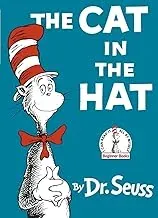
The visual storytelling proves just as important as the text. The book's distinctive illustrations, dominated by the Cat's iconic red and white striped hat, use bold lines and strategic splashes of red and blue against black and white backgrounds. This limited color palette focuses young readers' attention while creating visual excitement that matches the story's energy.
Controlled Vocabulary, Unlimited Imagination
Writing within the constraints of a beginning reader vocabulary list could have produced stilted, educational prose. Instead, Unknown Author demonstrates how limitations can spark creativity. The rhythmic, rhyming text flows naturally while using simple sentence structures and repetitive patterns that support developing reading skills.
The controlled vocabulary doesn't feel restrictive—instead, it creates a bouncing, energetic rhythm that mirrors the Cat's anarchic presence. Young readers can tackle the text independently while still encountering a genuinely engaging story.
The author's decision to use rhyme and rhythm serves multiple purposes beyond entertainment. The predictable patterns help beginning readers anticipate words, building confidence and fluency. When children can predict "house" will rhyme with "mouse," they experience the satisfaction of successful reading while reinforcing phonetic patterns.
The Eternal Debate: Fun Versus Responsibility
Parents and educators have long debated the book's central message. The Cat arrives uninvited, ignores the children's initial protests, creates chaos throughout the house, and introduces two additional troublemakers. From one perspective, this models concerning behavior—trusting strangers, disobeying rules, and prioritizing fun over responsibility.
Yet this criticism may miss the story's more nuanced message about imagination and problem-solving. The Cat doesn't simply create mess and leave; he takes responsibility for cleaning up his chaos. The children aren't passive victims but active participants who must decide whether to tell their mother about the day's events. The story presents a moral dilemma without providing easy answers.
The book's enduring appeal suggests it taps into something fundamental about childhood—the desire for excitement and the conflict between safety and adventure. Rather than promoting irresponsibility, it acknowledges the tension children feel between following rules and seeking stimulation, particularly during the long, boring stretches of childhood.
Reading Level and Age Appropriateness
The Cat in the Hat typically suits children reading at a late kindergarten through early second-grade level, roughly ages 5-7. The controlled vocabulary and sentence structure make it accessible to beginning independent readers, while the engaging story maintains interest for children who might otherwise struggle with early reader materials.
Parents should consider their individual child's reading development and temperament. Some children may need adult guidance to understand the story's moral complexities, while others will simply enjoy the silly antics without deeper analysis. The book works equally well for independent reading practice and interactive read-aloud sessions.
The story's themes about decision-making and consequences can provide valuable discussion opportunities for families. Rather than avoiding the book's moral ambiguity, parents might use it to explore questions about rules, creativity, and taking responsibility for our actions.
A Classic That Earned Its Status
Comparing The Cat in the Hat to other early readers reveals its exceptional quality. Where many beginning reader books sacrifice story for vocabulary control, Unknown Author achieves both educational effectiveness and genuine entertainment.
The book's influence on children's literature extends far beyond its immediate success. It demonstrated that beginning readers could handle sophisticated themes and moral complexity when presented through appropriate vocabulary and engaging storytelling. This opened possibilities for more ambitious early reader series that balance educational goals with literary merit.
Modern early readers still measure themselves against the standard this book established. While contemporary books may feature more diverse characters or address different themes, few match the perfect balance of educational effectiveness and storytelling excellence that makes The Cat in the Hat simultaneously a reading lesson and genuine literature.
The Cat in the Hat by Unknown Author remains an essential addition to any child's library—not despite its moral complexity, but because of it. The book respects young readers' intelligence while supporting their developing skills, creating an experience that works on multiple levels for different ages and reading abilities.
You can find The Cat in the Hat at Amazon or your local bookstore.