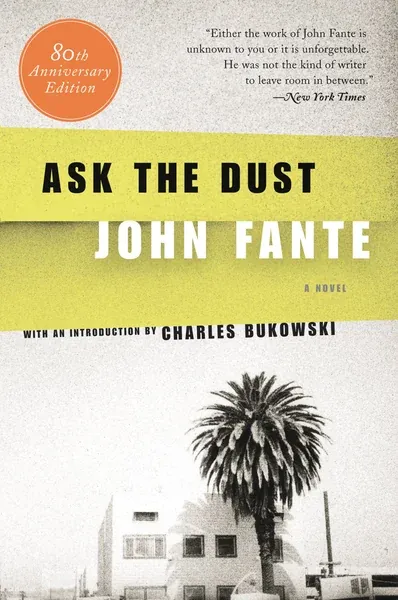
A Hungry Writer's Los Angeles
Fante presents Depression-era Los Angeles not as the glamorous Hollywood dream factory but as a harsh landscape of opportunity and desperation. The city becomes almost a character itself—dusty, sprawling, and indifferent to the dreams of transplants like Arturo Bandini. The author's choice to set the story in Bunker Hill, then a shabby district of rooming houses, creates an authentic sense of place that contrasts sharply with the California mythology.
The novel's structure mirrors its protagonist's scattered mental state. Rather than following a traditional plot arc, the narrative moves in fits and starts, reflecting both Bandini's creative process and his erratic emotional life. This approach, while sometimes challenging for readers expecting conventional storytelling, serves the thematic content perfectly.
Arturo Bandini: The Anti-Hero We Need
Arturo Bandini ranks among American literature's most complex protagonists—simultaneously sympathetic and insufferable. Fante refuses to romanticize the struggling artist, instead presenting a young man whose ambition often manifests as arrogance, whose sensitivity masks cruelty, and whose dreams of greatness coexist with petty prejudices.
Bandini's relationship with Camilla Lopez, a Mexican-American waitress, forms the novel's emotional core. Their dynamic reveals both Bandini's capacity for genuine feeling and his troubling attitudes toward race and class. Fante doesn't excuse these flaws but uses them to examine the contradictions within his protagonist's character.
The supporting cast, while limited, serves specific functions in illuminating different aspects of Bandini's personality. His interactions with fellow residents of the Alta Loma Hotel reveal his social awkwardness, while his encounters with established writers expose his desperate hunger for recognition.
Fante's Unforgiving Prose
John Fante writes with a directness that cuts through literary pretension. His sentences move with the rhythm of spoken language, creating an immediacy that draws readers into Bandini's fevered consciousness. The author avoids the elaborate metaphors common in literary fiction of the period, instead relying on precise observation and emotional honesty.
The dialogue crackles with authenticity, particularly in the exchanges between Bandini and Camilla. Fante captures the cadences of working-class speech without condescension, allowing his characters to reveal themselves through their own words rather than through authorial exposition.
Where the prose occasionally falters is in its treatment of racial and ethnic themes. While Fante was clearly attempting to address prejudice and class conflict, some passages reflect the limitations of their historical moment in ways that may jar contemporary readers.
Love, Ambition, and Self-Destruction
Ask the Dust explores the dangerous intersection of artistic ambition and romantic obsession. Bandini's pursuit of both literary success and Camilla's affections becomes increasingly desperate, leading to moments of genuine pathos and uncomfortable self-revelation. The novel asks difficult questions about the price of artistic dedication and whether creative achievement justifies personal cruelty.
The theme of economic anxiety runs throughout the work, grounding the protagonist's romantic and artistic struggles in material reality. Bandini's relationship with money—his shame over poverty, his fantasies of wealth, his inability to manage what little he has—adds psychological depth to what might otherwise be another bohemian romance.
Fante also examines the mythology of the American Dream through an Italian-American lens, showing how ethnic identity complicates the narrative of self-invention and success.
Where It Shines and Stumbles
The novel's greatest strength lies in its psychological realism. Fante creates a protagonist who feels genuinely human in all his contradictions and failings. The Los Angeles setting is rendered with vivid specificity, making the city as memorable as any character.
However, the book's treatment of female characters shows its age. While Camilla Lopez is more than a mere love interest, she often exists primarily to illuminate aspects of Bandini's character rather than as a fully realized individual. The novel's attitudes toward race, while progressive for 1939, require contextual understanding from modern readers.
The episodic structure, while thematically appropriate, sometimes leaves the narrative feeling unfocused. Readers looking for clear plot development may find the novel's meandering approach frustrating.
A Flawed but Essential Classic
Ask the Dust deserves its reputation as a classic of American literature not because it's perfect, but because it captures something authentic about artistic struggle and urban alienation. Fante's willingness to expose his protagonist's ugliest impulses, combined with his gift for precise psychological observation, creates a reading experience that lingers long after the final page.
The novel works best for readers interested in literary fiction that prioritizes character over plot, and for those curious about Depression-era Los Angeles beyond the Hollywood glamour. While its attitudes toward race and gender reflect its historical moment, the core themes of ambition, loneliness, and the search for meaning remain powerfully relevant.
This isn't comfort reading, but it's rewarding reading—a slim volume that packs considerable emotional punch and offers insights into both its historical period and the timeless struggles of creative life.