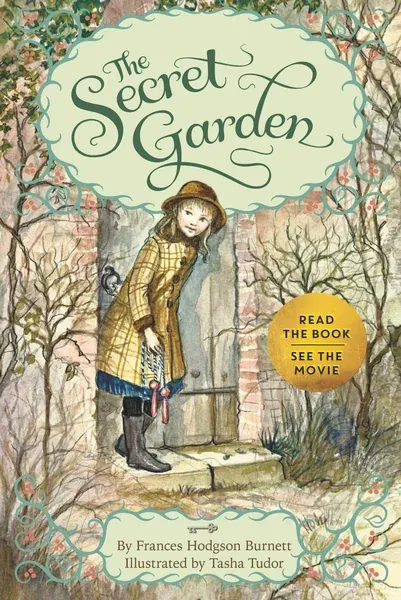
A Yorkshire Manor Full of Secrets
Burnett's skill lies in creating an atmosphere that feels both mysterious and nurturing. The Yorkshire setting isn't just backdrop—it's integral to the story's themes of growth and renewal. The author's prose captures the dialect and character of Yorkshire through both landscape and local speech patterns, though modern young readers may need guidance with some of the dialect.
The pacing deliberately mirrors the seasonal cycle of a garden coming back to life. Burnett doesn't rush her character development, allowing Mary's transformation from a sour, friendless child to a caring companion to unfold naturally alongside the literal blooming of the secret garden. This measured approach may feel slow to readers accustomed to faster-paced contemporary middle-grade fiction.
Mary, Colin, and Dickon Come Alive
The three central children each represent different aspects of childhood struggle and resilience. Mary Lennox begins as genuinely unlikable—a bold choice that pays off as readers witness her gradual awakening to empathy and joy. Colin, the sickly cousin convinced he's dying, embodies the power of negative thinking made manifest in physical symptoms. Dickon, the Yorkshire boy with an almost magical connection to nature and animals, serves as the catalyst for both children's healing.
Burnett avoids the trap of making these characters too perfect or their growth too easy. Mary's initial selfishness feels authentic, and Colin's hypochondriac tendencies, while extreme, reflect real childhood anxieties about health and mortality. The friendship that develops between the three feels earned rather than convenient.
Themes That Transcend Time
The Secret Garden explores themes that remain relevant: the healing power of nature, the importance of positive thinking, and how caring for something outside ourselves can transform us internally. The novel's focus on the mind-body connection—particularly through Colin's psychosomatic illness and recovery—feels remarkably modern for a book written over a century ago.
The story also grapples with loss and abandonment in ways that don't talk down to young readers. Mary's parents die in the opening, and both she and Colin are essentially orphaned children finding their way through grief. The garden itself is a symbol of renewal after loss, having been locked away since the death of Colin's mother.
However, some elements feel dated. The novel's treatment of Indian characters and culture reflects the colonial attitudes of 1911, requiring discussion with young readers about historical context. The story's emphasis on positive thinking, while generally beneficial, occasionally verges on suggesting that illness is simply a matter of attitude—a message that needs careful handling.
Burnett's Enduring Craft
Burnett's writing style strikes an effective balance between accessibility and literary quality. Her descriptions of the Yorkshire landscape and the garden's transformation are genuinely evocative without being overwrought. The author manages to maintain child-level language while tackling complex emotional themes.
The novel's structure, moving from Mary's isolation to the children's collaborative restoration of the garden, provides a satisfying arc of both plot and character development. Burnett trusts young readers to follow emotional complexity without spelling everything out explicitly.
Not Without Its Growing Pains
While The Secret Garden remains compelling, it's not without flaws for contemporary readers. The pacing, particularly in the opening sections, may feel slow compared to current middle-grade expectations. Some of the dialect can be challenging for young readers to parse, potentially creating barriers to engagement.
The novel's length—over 250 pages in most editions—requires more commitment than many picture books or early chapter books. The vocabulary level and sentence complexity make this most appropriate for confident readers aged 8-12, though younger children may enjoy it as a read-aloud.
The story's resolution, while emotionally satisfying, wraps up perhaps too neatly. Colin's recovery from his psychosomatic illness, while thematically important, happens with a speed that might seem unrealistic to modern readers familiar with more nuanced portrayals of mental health.
A Garden Worth Tending
The Secret Garden earns its status as a classic through Burnett's skillful weaving of character development, natural imagery, and timeless themes. Despite some dated elements, the core story of friendship, healing, and growth remains powerful for young readers. The novel works particularly well for children dealing with major life changes, loss, or feelings of isolation.
Parents should be prepared to discuss the historical context of some cultural references and perhaps help with dialect passages. The themes of death, abandonment, and illness are handled sensitively but are present throughout the story.
For families seeking classic literature that still speaks to contemporary concerns about mental health, environmental connection, and the power of positive relationships, The Secret Garden remains a worthwhile choice. It pairs well with modern books exploring similar themes and offers a gentle introduction to more complex literary classics.