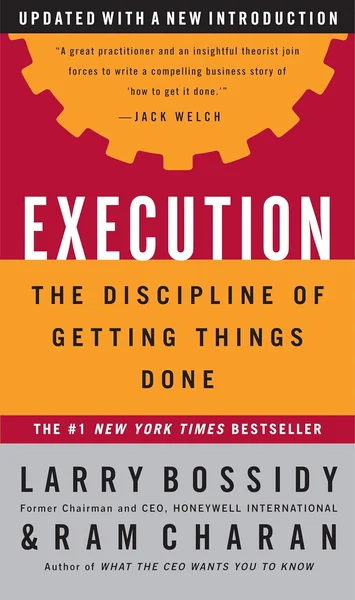
The Core Framework for Getting Things Done
The authors construct their argument around three fundamental processes that drive effective execution: the people process, the strategy process, and the operations process. Rather than treating these as separate organizational functions, Bossidy and Charan demonstrate how integrated leadership across all three areas creates sustainable competitive advantage.
The people process receives particular emphasis, with the authors arguing that getting the right people in the right roles forms the foundation of execution excellence. They outline systematic approaches for talent assessment, development, and succession planning that go beyond traditional HR practices. The framework emphasizes honest performance evaluation and the courage to make difficult personnel decisions when execution demands change.
The strategy process moves beyond abstract planning to focus on actionable strategic thinking. The authors critique strategies that sound impressive but lack clear pathways to implementation, instead advocating for strategies built around organizational capabilities and market realities. Their approach integrates competitive analysis with internal capacity assessment to create strategies that can actually be executed.
Where many business books remain theoretical, this work provides concrete methodologies for improving organizational execution. The authors introduce specific techniques for conducting effective reviews, setting meaningful goals, and maintaining accountability across leadership teams. Their emphasis on disciplined follow-through addresses one of the most common failure points in organizational change initiatives.
The book's treatment of operational execution focuses on linking day-to-day activities with strategic objectives. The authors demonstrate how clear communication cascades and robust feedback mechanisms create alignment between front-line operations and executive vision. They provide frameworks for identifying execution bottlenecks and systematic approaches for removing organizational obstacles.
One strength lies in the authors' attention to cultural factors that support or undermine execution. They explore how organizational values, reward systems, and leadership behaviors either reinforce or sabotage execution discipline. The practical guidance includes approaches for building execution-oriented cultures that sustain performance improvement over time.
Leadership Insights from Executive Experience
Bossidy's perspective as a former Fortune 500 CEO adds credibility to the theoretical frameworks presented. His experience leading major organizational transformations provides real-world context for the concepts discussed. The book benefits from this practitioner perspective, offering insights that emerge from actual leadership challenges rather than academic observation.
The authors' treatment of leadership development focuses specifically on execution competencies rather than general management skills. They outline how leaders can develop the discipline, analytical rigor, and emotional intelligence required for effective execution. Their approach acknowledges the personal and organizational barriers that prevent leaders from maintaining execution focus.
The work also addresses the role of senior leadership in creating organizational conditions that support execution excellence. The authors explore how CEO behavior, board engagement, and executive team dynamics either enable or constrain organizational execution capacity. Their analysis provides actionable guidance for senior leaders seeking to improve organizational performance.
Limitations and Critical Assessment
Despite its practical value, the book reflects certain limitations that reduce its universal applicability. The authors' background in large, established corporations shapes their perspective in ways that may not translate effectively to smaller organizations or entrepreneurial environments. Their frameworks assume organizational resources and structures that may not exist in all business contexts.
The book's age also shows in some of its assumptions about business environments and technological capabilities. While the core principles remain relevant, some tactical recommendations feel dated for modern organizations dealing with digital transformation and remote work realities. Contemporary readers may need to adapt the frameworks for current business conditions.
Additionally, the authors' focus on traditional hierarchical structures may limit relevance for organizations pursuing flatter, more networked organizational designs. The execution frameworks assume clear authority relationships and formal organizational boundaries that don't always reflect modern organizational realities.
Strategic Value for Modern Leaders
For executives and managers struggling with implementation gaps, this book provides systematic approaches for improving organizational execution. The frameworks offer particular value for leaders in turnaround situations or those managing significant organizational change initiatives. The emphasis on discipline and accountability resonates with leaders seeking to move beyond planning into actual results.
The book serves as an essential reference for senior leaders responsible for organizational performance. Its integration of people, strategy, and operations provides a comprehensive framework for thinking about execution challenges. Business leaders who implement these principles typically see measurable improvements in organizational effectiveness and strategic goal achievement.