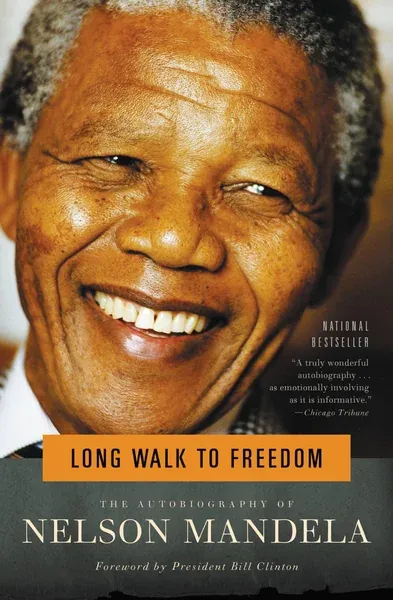
Nelson Mandela's Long Walk to Freedom stands as one of the most powerful autobiographies of the 20th century, offering an intimate portrait of a man who transformed from rural village boy to revolutionary leader to global icon. This sweeping memoir chronicles Mandela's journey through 27 years of imprisonment and his eventual rise to become South Africa's first Black president. For readers seeking to understand both the personal cost of fighting injustice and the broader historical context of apartheid, this autobiography delivers with unflinching honesty and remarkable grace.
The book opens with Mandela's memorable reflection on his birth name: "APART FROM LIFE, a strong constitution, and an abiding connection to the Thembu royal house, the only thing my father bestowed upon me at birth was a name, Rolihlahla." This early passage establishes the contemplative, measured tone that characterizes Mandela's narrative voice throughout the 750-page journey.
From Village Life to Political Awakening
Mandela's storytelling prowess becomes evident as he traces his transformation from a young man destined for tribal leadership to a lawyer fighting systemic oppression. His prose combines the precision of his legal training with the wisdom gained through decades of reflection. The narrative moves seamlessly between intimate family moments and pivotal historical events, never losing sight of the human elements that shaped his worldview.
The early sections depicting his childhood in the Transkei and education at Fort Hare University provide crucial context for understanding how Mandela's political consciousness developed. His descriptions of witnessing racial inequality firsthand, combined with his exposure to pan-African ideas, create a compelling foundation for his later radicalization.
The Weight of Resistance and Sacrifice
Perhaps the autobiography's greatest strength lies in Mandela's unflinching examination of the personal costs of his political commitments. He doesn't romanticize his choices or gloss over the strain his activism placed on his marriages and relationships with his children. His candid discussions about the dissolution of his first marriage to Evelyn Mase and the complexities of his relationship with Winnie Mandela reveal a man grappling with the impossible balance between personal happiness and political duty.
The sections covering his years with the African National Congress and the formation of Umkhonto we Sizwe (Spear of the Nation) demonstrate Mandela's evolution from advocate for peaceful resistance to reluctant supporter of armed struggle. His moral wrestling with violence as a political tool adds nuance to what could have been a simple heroic narrative.
Robben Island and the Crucible of Character
The Robben Island years form the emotional and philosophical heart of the autobiography. Mandela's accounts of prison life reveal both the dehumanizing brutality of the apartheid system and the extraordinary resilience of the human spirit. His relationships with fellow political prisoners, including Walter Sisulu and Ahmed Kathrada, illustrate how solidarity and intellectual discourse sustained them through decades of harsh treatment.
Rather than dwelling on victimhood, Mandela focuses on how imprisonment became a period of intense learning and self-reflection. His descriptions of studying Afrikaans to better understand his captors and his gradual recognition that reconciliation, not revenge, must guide South Africa's future show a leader developing the wisdom that would later prove crucial to the nation's peaceful transition.
The Complexity of Leadership and Legacy
Where Long Walk to Freedom particularly excels is in its honest portrayal of leadership's moral ambiguities. Mandela doesn't present himself as infallible; instead, he acknowledges mistakes, moments of doubt, and the ongoing tension between idealism and pragmatism. His discussions of the negotiations leading to democratic elections reveal the delicate balancing act required to prevent civil war while ensuring meaningful change.
The autobiography's treatment of violence and moral compromise provides valuable lessons for readers interested in ethical leadership under extreme circumstances. Mandela's evolution from young hothead to elder statesman offers insights into how suffering can forge rather than embitter character when channeled through principled commitment to justice.
Strengths and Inevitable Limitations
While the autobiography succeeds admirably in conveying Mandela's personal journey and political philosophy, it occasionally suffers from its comprehensive scope. Some sections, particularly those dealing with complex political negotiations, may overwhelm readers unfamiliar with South African history. The book's length and detail orientation make it more suitable for serious readers than casual browsers.
The narrative also reflects the constraints of Mandela's position as a unifying figure. His diplomatic language sometimes obscures deeper conflicts and controversies that shaped the anti-apartheid movement. Readers seeking more critical analysis of ANC internal politics or detailed examination of the Truth and Reconciliation Commission's limitations will need to consult additional sources.
Essential Reading for Understanding Modern History
Long Walk to Freedom remains indispensable for anyone seeking to understand how individuals can maintain dignity and purpose under extreme oppression. The book's themes of forgiveness, patience, and moral courage resonate far beyond South African borders. For teenage readers and adults alike, Mandela's story demonstrates that meaningful change often requires decades of sustained effort rather than quick victories.
The autobiography pairs well with other apartheid-era memoirs like Steve Biko's writings or Mark Mathabane's Kaffir Boy, offering complementary perspectives on resistance and survival under institutionalized racism. Teachers and parents should note that while the book addresses mature themes including violence and political persecution, Mandela's measured approach makes complex historical events accessible to high school students.
Mandela's Long Walk to Freedom stands as both historical document and moral testament. It reminds us that the path toward justice often demands everything from those who walk it, while demonstrating that even the longest struggle can culminate in reconciliation rather than revenge. This autobiography deserves its place among the essential memoirs of the modern era.
You can find Long Walk to Freedom at Amazon, your local bookstore, or through the Nelson Mandela Foundation, which continues to promote his legacy and educational initiatives.