

8 min read
4.6
· 1,816 Amazon ratingsShare This Review
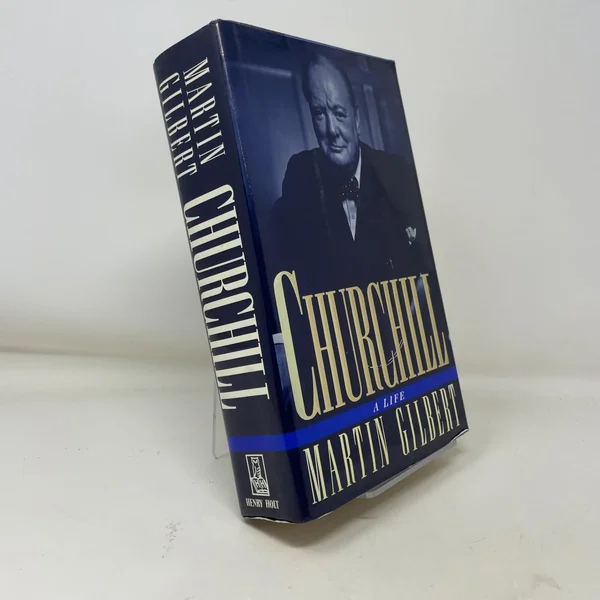
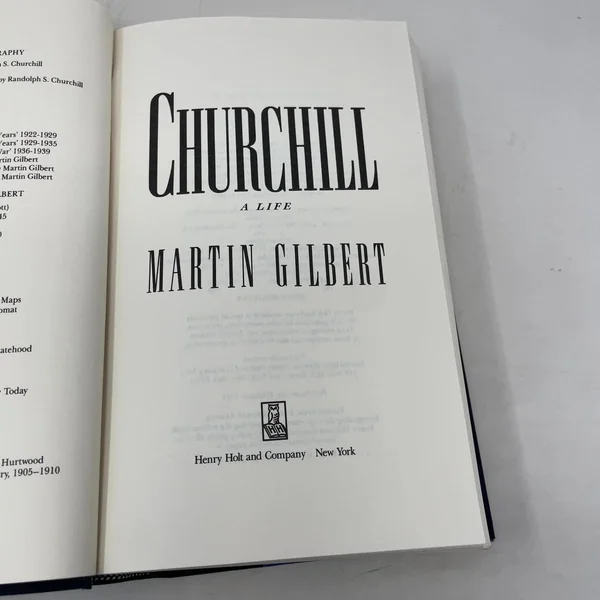
Churchill: A Life by Martin Gilbert Review: The Definitive Single-Volume Biography
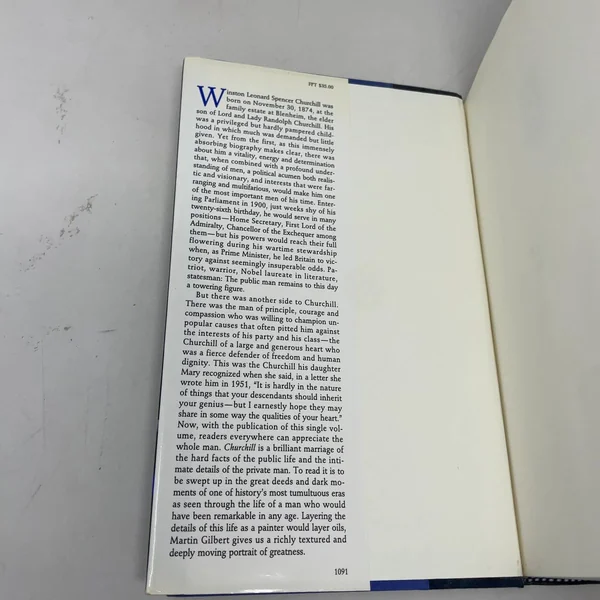
Martin Gilbert's Churchill: A Life stands as the authoritative single-volume biography of Sir Winston Churchill, distilling decades of primary scholarship into a chronological portrait of one of the twentieth century's most consequential public figures.
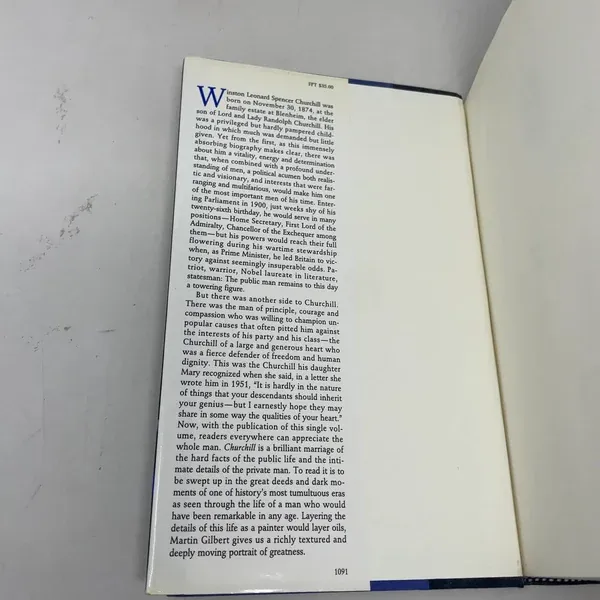
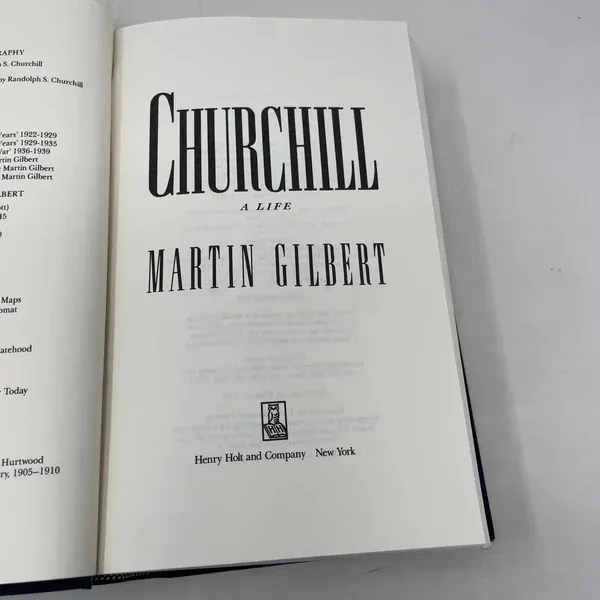
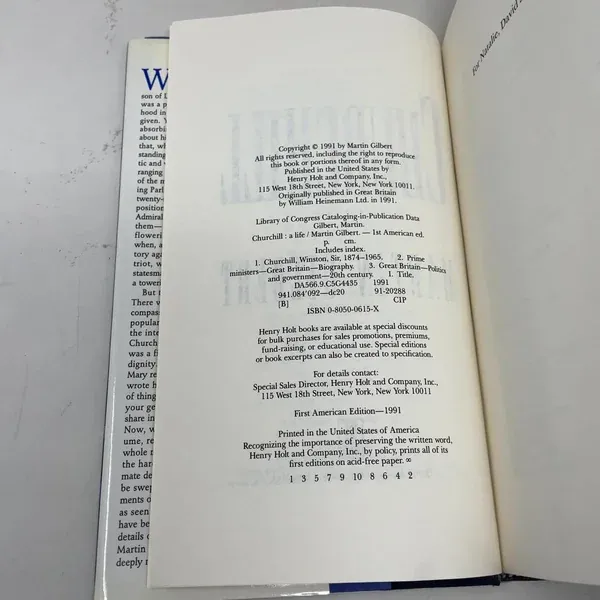 Tap to enlarge
LuvemBooks Verdict
Best for
Serious readers of history or biography who want the single most authoritative, fully documented account of Churchill's entire public life — from schoolboy and soldier to wartime leader and elder statesman — and are willing to invest the time a roughly 1,000-page scholarly synthesis demands.
Worth it if
You want the deepest single-volume Churchill scholarship available, combining the research of Gilbert's eight-volume official biography with additional material unavailable at the time of those earlier volumes, all in one chronologically ordered narrative.
Skip if
Readers seeking a concise introduction, a brisk reassessment, or a revisionist or polemical take on Churchill's legacy will find Gilbert's exhaustive, chronicle-first approach unsatisfying and the length daunting.
What readers & critics say
Publishers Weekly, whose review page was retrieved directly, describes the book as "a full and rounded examination of Churchill's life, both in its personal and political aspects," while noting frankly that it is "basically a distillation of all he has written about his subject up to now." The penguin.co.uk listing relays a Daily critical coverage verdict — "by far the most lucid, comprehensive and authoritative account of Churchill that has been offered in a single volume" — alongside a critical coverage description of "a masterpiece of scholarship."
“A full and rounded examination of Churchill's life, both in its personal and political aspects — basically a distillation of all he has written about his subject up to now.”
— Publishers WeeklyAge & Reading Level
Recommended age
Adult
Reading level
Adult
who it suits
Skip if you're looking for a concise, opinionated, or revisionist reassessment of Churchill's legacy rather than a comprehensive archival chronicle.
Churchill: A Life by Martin Gilbert is Trending
HBO's Churchill Films Back in the Spotlight
HBO's Winston Churchill films — including the follow-up to 'The Gathering Storm' — are currently surfacing on Max, putting Churchill back on people's radar. Whenever a compelling screen portrait of Churchill appears, readers tend to reach for the definitive biography to go deeper.
HBO's Churchill films, including the acclaimed follow-up to 'The Gathering Storm' that covers Churchill's wartime leadership from 1940 to 1945, are currently available on Max. That's bringing a fresh wave of viewers face-to-face with one of history's most complicated leaders — and a lot of those viewers want more than a two-hour film can offer.
That's where Martin Gilbert's Churchill: A Life comes in. Gilbert spent decades as Churchill's official biographer, and this single-volume edition is widely considered the go-to book if you want the full story without committing to the multi-volume set. It covers everything the films touch on and a great deal more, drawing on primary sources that most writers never had access to.
If you've just finished watching the HBO films and found yourself wanting to understand Churchill's decisions, contradictions, and legacy in real depth, this is the natural next read. It's thorough but readable — a biography that respects your time while genuinely doing the subject justice.
In This Review
- What Works & What Doesn't
- What the Book Is and What It Covers
- The Central Argument and Its Emphasis
- Scholarly Weight and Significance
- Strengths as a Biography
- Ideal Readership and Genuine Limitations
What Works & What Doesn't
What Works
- Authorized, first-hand scholarship: Gilbert's unique status as Churchill's official biographer lends the book unmatched archival authority.
- Comprehensive chronological scope covering all of Churchill's overlapping careers — soldier, journalist, parliamentarian, cabinet minister, statesman, and historian.
- Incorporates new information unavailable at the time of the original eight-volume biography, making it more than a simple abridgment.
- Praised by the Daily Critics as 'by far the most lucid, comprehensive and authoritative account of Churchill that has been offered in a single volume.'
- Balances personal and political dimensions, giving sustained attention to Churchill's decade of political exile (1929–1939) and its role in shaping his wartime leadership.
What Doesn't
- At roughly 1,000 pages, the book demands a serious time commitment and is not suited to readers seeking a concise introduction.
- Gilbert's approach is that of a comprehensive chronicler; readers seeking a revisionist or polemical reassessment of Churchill's legacy will not find that here.
What the Book Is and What It Covers
The Central Argument and Its Emphasis
Scholarly Weight and Significance
Strengths as a Biography
Ideal Readership and Genuine Limitations
Frequently Asked Questions
Sources & Further Reading
The key facts and claims in this review are grounded in the retrieved, verified sources listed below.
- Cited in this review
- 1
barnesandnoble.com
- 2
publishersweekly.com
- Further reading
- 3
Martin Gilbert, Wikipedia
- 4
martingilbert.com
- 5
newbookrecommendation.com
- 6
winstonchurchill.org
- 7
- 8
books.google.com
Related Reviews
Reviews of books we picked for readers who enjoyed Churchill.


Reader Comments
No comments yet
Be the first to share your thoughts!