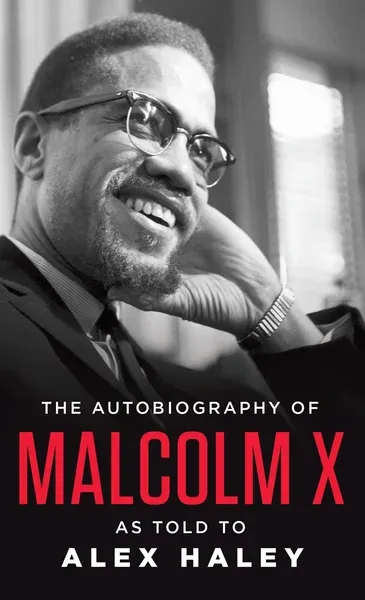
The collaboration between Malcolm X and journalist Alex Haley produced one of the most powerful and unflinching autobiographies in American literature. But is The Autobiography of Malcolm X appropriate for teenagers, and what should readers expect from this intense journey through one man's radical transformation? This biographical masterpiece doesn't shy away from difficult truths, making it both essential and challenging reading.
Written through extensive interviews conducted by Haley in Malcolm X's final years, this autobiography traces the evolution from Malcolm Little to Detroit Red to Malcolm X to El-Hajj Malik El-Shabazz. The book captures not just a personal transformation but a pivotal moment in American civil rights history, told with brutal honesty and intellectual rigor.
From Detroit Red to El-Hajj Malik El-Shabazz
The autobiography's greatest strength lies in its unflinching portrayal of transformation. Malcolm X doesn't sanitize his past—the criminal activities, the hustling, the prison years are all presented with stark clarity. This honesty extends to his intellectual and spiritual evolution, from his conversion to the Nation of Islam through his pilgrimage to Mecca and final philosophical shifts.
Haley's role as collaborator proves crucial here. His background as a journalist brings structure and narrative flow to Malcolm X's sometimes fragmented recollections. The book reads as a cohesive story rather than a collection of interviews, though Haley wisely preserves Malcolm X's distinctive voice throughout. The epilogue, completed after Malcolm X's assassination, provides essential context about both the collaboration process and the tragedy that ended this remarkable life.
Confronting America's Racial Reality
The autobiography pulls no punches in its examination of American racism. Malcolm X's analysis of systemic oppression, particularly his critique of integration versus black nationalism, remains startlingly relevant. His intellectual development—from the simplistic mythology of the Nation of Islam to a more nuanced understanding of global politics and human rights—demonstrates remarkable growth.
The book's treatment of violence deserves particular attention. Malcolm X advocates for armed self-defense, a position that contrasts sharply with the nonviolent approach of Martin Luther King Jr. His famous "by any means necessary" philosophy emerges not from hatred but from a clear-eyed assessment of American racial violence. This nuanced position challenges readers to grapple with complex questions about resistance and justice.
Beyond Malcolm X himself, the autobiography introduces readers to pivotal figures who shaped his worldview. Elijah Muhammad, leader of the Nation of Islam, appears as both mentor and eventual betrayer. The complex relationship between these two men—one that moved from devotion to bitter disillusionment—forms a central tension in the narrative.
Alex Haley emerges as more than just a collaborator; his patient questioning and careful structuring help readers understand the magnitude of Malcolm X's transformation. The book also brings to life the broader community of the Nation of Islam, from devoted followers to internal critics, showing how Malcolm X's growing independence created inevitable conflict.
International figures like the leaders Malcolm X met during his pilgrimage to Mecca play crucial roles in his final intellectual evolution. These encounters challenged his earlier beliefs about race and opened him to a more universal understanding of human rights.
Haley's Masterful Collaboration
The writing itself deserves recognition as a masterpiece of collaborative biography. Haley manages to preserve Malcolm X's passionate, intellectually rigorous voice while creating a coherent narrative structure. The prose alternates between street-smart vernacular and sophisticated political analysis, reflecting Malcolm X's own journey from hustler to international human rights advocate.
The book's pacing builds dramatic tension as Malcolm X's relationship with the Nation of Islam deteriorates. The final sections, written as Malcolm X faced increasing death threats, carry an urgency that makes his assassination feel both inevitable and tragic. Haley's epilogue provides essential context without overshadowing Malcolm X's own words.
Mature Themes Require Thoughtful Guidance
Parents and educators considering this book for teenage readers should understand its mature content. The autobiography contains frank discussions of criminal activity, drug dealing, prostitution, and violence. Malcolm X's early life includes illegal activities described in detail, while his later sections grapple with complex theological and political questions.
The book's treatment of race relations includes harsh critiques of white America that some readers may find challenging. Malcolm X's analysis of systemic racism remains powerful precisely because it refuses to soften difficult truths. His evolving views on violence and self-defense require careful discussion, particularly with younger readers.
However, these challenging elements serve the book's larger purpose of demonstrating intellectual and spiritual growth. Malcolm X's transformation from criminal to international human rights advocate offers a powerful example of human capacity for change.
A Biography That Transcends Its Genre
The Autobiography of Malcolm X succeeds as both personal narrative and historical document. Unlike many celebrity autobiographies, this book grapples with serious intellectual and moral questions. Malcolm X's willingness to acknowledge his mistakes and evolution of thought creates a complex, believable portrait of human growth.
The book's influence on subsequent civil rights discourse cannot be overstated. Its frank discussion of black nationalism, critique of integration, and international perspective on American racism helped shape debates that continue today. The autobiography remains essential reading for understanding both Malcolm X's individual journey and the broader context of American civil rights history.
For readers familiar with other civil rights autobiographies, this book offers a necessary counterpoint to more moderate voices. Where other memoirs might emphasize reconciliation, Malcolm X's autobiography insists on truth-telling, even when that truth proves uncomfortable.
Where to Buy
You can find The Autobiography of Malcolm X at Amazon, your local bookstore, or directly from Ballantine Books.