8 min read
4.1
· 42,148 Amazon ratingsShare This Review
Our review
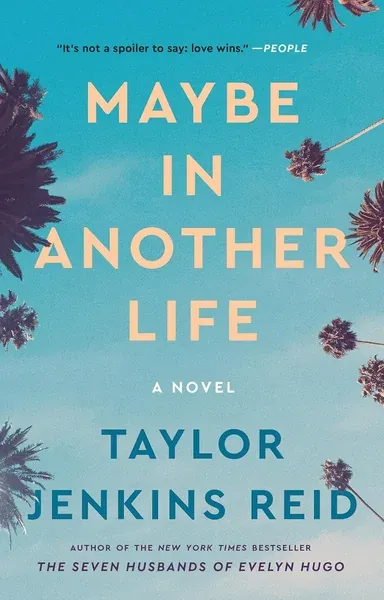
Maybe in Another Life by Taylor Jenkins Reid Review: A Dual-Timeline Romance with Real Philosophical Depth
Maybe in Another Life is Taylor Jenkins Reid's third novel, published by Atria Books in July 2015, following twenty-nine-year-old Hannah Martin as a single night out in Los Angeles splits into two fully separate, alternating storylines — each tracing a radically different version of her life depending on one small choice. The novel uses its parallel-universe structure to explore questions of fate, chance, and whether happiness can be found down more than one road. Reader responses collected from published sources praise it as entertaining, unpredictable, and emotionally compelling, with particular admiration for how cleanly the two timelines remain distinct yet thematically intertwined.
LuvemBooks Verdict
Best for
Readers who enjoy emotionally warm, character-driven fiction and are drawn to "what if" premises that use a parallel-timeline structure to explore questions of chance, fate, and the shape of a life.
Worth it if
You're willing to engage with the novel's central philosophical argument — that happiness is achievable across multiple possible lives — and want that idea delivered inside an accessible, emotionally resonant narrative rather than a cerebral or experimental one.
Skip if
You come to it primarily for plot momentum, as the dual-timeline mechanics can feel schematic and the surface-level events run lighter than the thematic weight the structure is asked to carry.
What readers & critics say
Kirkus Reviews (starred review) called the novel "entertaining and unpredictable," concluding that "Reid makes a compelling argument for happiness in every life." The Young Folks praised the structural achievement specifically, noting that the two storylines succeed because they remain "completely separate and satisfying" while staying thematically connected; reader commentary at Aestas Book Blog echoed this, with readers describing it as impossible to put down and noting it "made you question your own choices yet feel good about them at the same time." Debbish.com observed that while the plot itself runs light, the underlying themes carry more complexity — a tension the novel navigates through its ideas rather than its events.
“Entertaining and unpredictable; Reid makes a compelling argument for happiness in every life.”
— Kirkus ReviewsAsk LuvemBooks
Was this helpful?
- Is it worth reading?
- For readers drawn to character-focused, emotionally warm fiction with a structural hook that rewards reflection, Maybe in Another Life delivers. Reviewers at The Young Folks praised Reid's ability to portray Hannah Martin convincingly as two separate people across two timelines, and reader commentary gathered at Aestas Book Blog called it 'refreshingly original, uplifting, and captivating.' The key caveat: the surface plot runs lighter than the themes, so readers who prioritize plot-driven momentum over philosophical payoff may find the dual structure more schematic than satisfying.
- Similar books
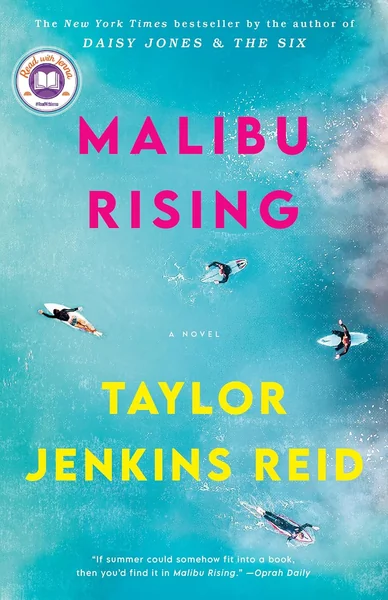
- Readers who enjoy Maybe in Another Life's blend of emotional warmth and structural ambition will likely gravitate toward other Taylor Jenkins Reid titles — LuvemBooks has reviewed The Seven Husbands of Evelyn Hugo and Malibu Rising, both of which share Reid's character-driven focus and emotionally resonant storytelling. Beyond Reid, the novel sits in the tradition of 'sliding doors' fiction — stories dramatizing roads not taken — alongside works like One Day by David Nicholls and Sliding Doors (the film that named the sub-genre). For readers drawn specifically to the parallel-lives format in women's fiction, Emily Henry's emotionally driven romances offer a comparable reading experience.
- Who should read this?
- Maybe in Another Life is designed for readers who enjoy character-focused, emotionally driven fiction with a structural hook that invites reflection rather than just plot momentum. It will appeal particularly to fans of the 'sliding doors' sub-genre — stories built around roads not taken — and to readers who enjoy questions about chance, choice, and the shape of a life delivered inside a warm, accessible narrative. It also rewards readers already familiar with Taylor Jenkins Reid who want to trace her development across her earlier work.
- About Taylor Jenkins Reid
- Taylor Jenkins Reid is an American author best known for her novels The Seven Husbands of Evelyn Hugo, Daisy Jones & the Six, One True Loves, Malibu Rising, Carrie Soto Is Back, and Atmosphere. Maybe in Another Life, published in 2015, was her third novel and predates the wider recognition she would earn from her later works.
- Is it a good book club pick?
- Maybe in Another Life is a strong book club selection. Its central premise — that happiness may be achievable across multiple possible lives, not just one fated path — generates the kind of genuine debate that makes for productive group discussion. The dual timelines give members concrete material to argue: which version of Hannah Martin's life is more fulfilling, and what that reveals about each reader's own assumptions about fate and choice. Reader commentary has noted it 'made you question your own choices yet feel good about them at the same time,' which is fertile ground for group reflection.
- How does it compare to Reid's other books?
- As Reid's third novel, Maybe in Another Life is more structurally experimental than her later, more sweeping works. Where The Seven Husbands of Evelyn Hugo spans decades of Hollywood history across a large cast, and Malibu Rising unfolds a single night across a famous family's saga, Maybe in Another Life keeps its focus tight — one woman, one pivotal decision, two possible futures. It demonstrates the emotionally warm, character-driven style that defines Reid's reputation while showing an early appetite for formally ambitious structure that her later books approach differently.
- What is 'sliding doors' fiction?
- The 'sliding doors' sub-genre refers to stories that dramatize roads not taken — narratives built around a single pivot point after which two or more alternate versions of a life unfold. The term derives from the 1998 film Sliding Doors. What distinguishes Maybe in Another Life within this sub-genre, according to the review, is its sustained commitment to developing both timelines as complete, fully realized arcs rather than using the parallel structure as a brief thought experiment or framing device.
Summarize this book
Follow up
Synthesized from verified book data & published reviews · How we review
Press Enter to ask. Answers come from our editorial Q&A — start typing to see related questions.
Age & Reading Level
Recommended age
Adult
Reading level
Adult
who it suits
Skip if You want a plot-driven narrative with strong momentum rather than a character- and theme-led story built around philosophical reflection.
Our Review

What the Novel Is and What It Does
Its Place in Taylor Jenkins Reid's Body of Work
What the Novel Does Well
Thematic Ambition and Its Trade-Offs
Who This Novel Is For
Sources & Further Reading
The key facts and claims in this review are grounded in the retrieved, verified sources listed below.
- 1
Taylor Jenkins Reid, Wikipedia
- 2
kirkusreviews.com
- 3
theyoungfolks.com
- 4
taylorjenkinsreid.com
- 5
- 6
- 7
- 8
- 9
- 10
prologuebookshop.com
Books like Maybe in Another Life
Curated picks for readers who enjoyed Maybe in Another Life, with our reasoning for each match.
If you liked Maybe in Another Life