
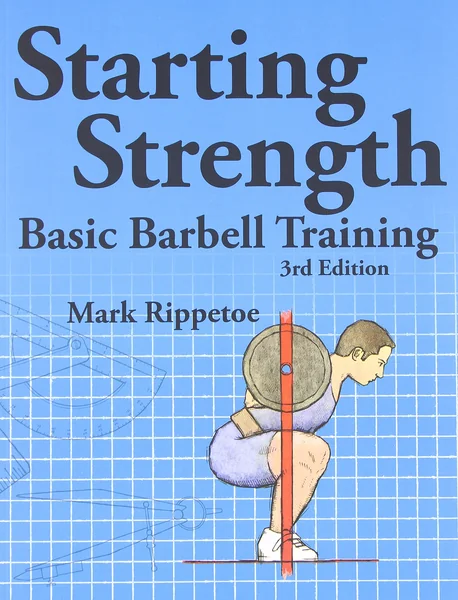
A technically excellent but dogmatically rigid strength training manual that works well for a specific demographic but lacks the flexibility needed for broader application.
What works
• Provides exhaustive technical analysis with specific, actionable coaching cues like "drive your knees out" rather than vague instructions
• Features detailed anatomical diagrams that illustrate biomechanics, such as why low-bar squat position creates more efficient leverages
• Offers a mathematically elegant linear progression system with clear metrics (add 5 pounds to squats/deadlifts, 2.5 pounds to presses each workout)
• Eliminates decision paralysis by focusing exclusively on five fundamental barbell movements instead of dozens of exercises
• Breaks down complex movements with engineering-level precision, explaining concepts like how bar position affects leverages
What doesn't
• Presents dogmatic approach that dismisses alternative techniques (like high-bar squats) despite their proven effectiveness
• Technical density and obsessive detail can overwhelm beginners rather than help them
• Rigid methodology ignores individual body type differences and leaves little room for personal adaptation