
BOOKS
Published
Read Time
7 min read
Share This Review
Freestyle Skateboarding Tricks by Sean D'Arcy & Phillip Marshall Review: A Solid Step-by-Step Guide for Young Skaters
Freestyle Skateboarding Tricks: Flat Ground, Rails, Transitions is a Firefly Books how-to guide aimed at young skateboarders, co-authored by world-renowned soccer freestyler Sean D'Arcy and professional freestyle skateboarder Phillip Marshall, covering everything from basic flat-ground moves to rails, grinds, and transitions through step-by-step instructions and hundreds of colour photographs. This review is based on the book's contents and published source commentary, not hands-on use.
In This Review
- What Works & What Doesn't
- What the Book Contains and How It Is Structured
- The Authors and Their Credentials
- Photographic Approach and Visual Instruction
- Reception and Contextual Significance
- Who This Book Is For and Where It Has Limits
What Works & What Doesn't
What Works
- Step-by-step instructions are described by CM Magazine reviewer Elaine Fuhr as clear and simply written, suited to the book's young target audience
- Recurring 'Common Problems' inserts address specific difficulties learners face with each trick, adding practical troubleshooting beyond basic instruction
- Hundreds of colour action photographs — featuring young skateboarders performing the moves — form the instructional core alongside the written steps
- Co-authored by professional freestyle skateboarder Phillip Marshall and series-experienced author Sean D'Arcy, grounding the content in practitioner expertise
- A history of skateboarding introduces the chapters, providing cultural context beyond a pure trick-list format
What Doesn't
- Published in 2010, the book's cultural references and featured tricks reflect its era; readers looking for the most current pro moves or contemporary skate culture will find the material dated
- As a print how-to guide, it cannot replicate video demonstration, and the real-world effectiveness of its instructions depends entirely on the individual learner — something no content-based review can evaluate
This review is based on the book's documented contents and published source commentary, not hands-on application.
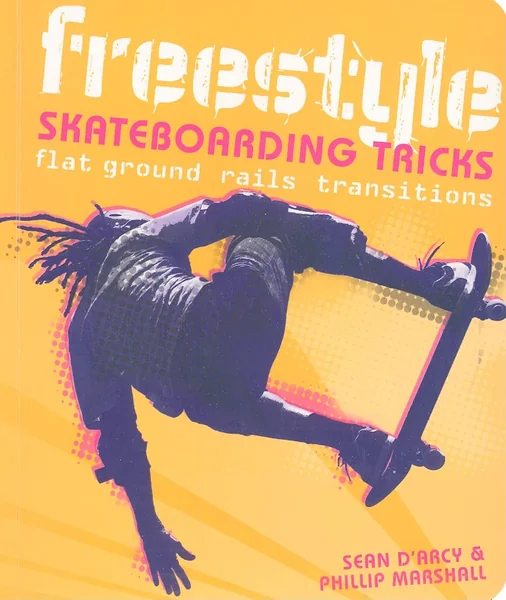
Freestyle Skateboarding Tricks: Flat Ground, Rails, Transitions by Sean Arcy, Phillip Marshall front cover
What the Book Contains and How It Is Structured
Freestyle Skateboarding Tricks: Flat Ground, Rails, Transitions, published by Firefly Books in August 2010, is a how-to guide designed to take young skateboarders from foundational skills through to more advanced moves drawn from professional practice. The book covers flips, slides, grinds, pivots, and a wide range of other techniques, organised across three core terrain types: flat ground, rails, and transitions. Each trick is broken down into step-by-step instructions written to be clear and accessible to a younger audience. A recurring feature throughout the book is a boxed insert titled "Common Problems," which addresses the specific difficulties young learners are most likely to encounter with each individual trick — a practical structural choice that goes beyond a simple photo-and-caption format.
“have combined their knowledge and love of sports to write a book that children and youth alike will find appealing and useful”
The Authors and Their Credentials
The book brings together two authors with distinct but complementary expertise. Sean D'Arcy is a world-renowned soccer freestyler and the author of several titles in the same Firefly freestyle sports series, including Freestyle Football Tricks (2007), Freestyle Football Street Moves (2009), and Freestyle BMX Tricks (2010), demonstrating an established track record in translating action-sports technique for younger readers. Phillip Marshall is a professional freestyle skateboarder, providing the discipline-specific knowledge at the heart of the content. According to commentary sourced from AbeBooks, the two authors "have combined their knowledge and love of sports to write a book that children and youth alike will find appealing and useful" — a pairing that grounds the instructional content in genuine practitioner experience rather than purely editorial construction.
Photographic Approach and Visual Instruction
A defining feature of the book is its heavy reliance on colour photography to demonstrate technique. Sourced commentary from AbeBooks describes the photographs as "amazing action shots of kids maneuvering their skateboards through each move" — a deliberate design choice that shows the target audience performing the tricks rather than adult professionals, which reinforces the book's youth-facing pitch. The book is described as packed with hundreds of colour photos alongside tips and hints throughout, making the visual layer central to how each trick is communicated. This approach is consistent with the action-sports how-to format, where sequential photography carries much of the instructional weight that written prose alone cannot.
Reception and Contextual Significance
CM Magazine reviewer Elaine Fuhr offered a substantive assessment of the book upon its 2010 release, noting that the step-by-step instructions are "clear, simply written" and that the "Common Problems" inserts provide genuine value for young learners encountering difficulties. Fuhr also singled out a historical dimension, observing that "a very interesting history of skateboarding introduces the chapters" — a contextual thread that situates the tricks within the broader culture and development of the sport. For a skill-instruction title aimed at readers aged 8 to 12, the inclusion of skateboarding history adds a layer of context that lifts the book beyond a pure trick-list format. Its place within D'Arcy's broader Firefly freestyle series also positions it as part of a coherent publishing programme rather than a standalone title.
Who This Book Is For and Where It Has Limits
The book is squarely aimed at children and young teenagers — the publisher lists its reading age as 8 to 12 — who are drawn to skateboarding and want structured guidance on building a repertoire of tricks. Readers in that range who learn effectively from sequential photographs paired with written instruction are the natural audience. However, as with any skill-instruction book, the gap between reading technique and executing it on a board is real, and any assessment of how well the instructions translate to physical practice in the hands of a specific learner lies outside what a content-based review can determine. Additionally, given the publication date of 2010, readers seeking the most current tricks or references to contemporary pro skaters will find the book reflects its era; the fundamentals it covers are enduring, but the cultural references are over a decade old.
Frequently Asked Questions
Who is this book aimed at?
The book is squarely aimed at children and young teenagers, with the publisher listing its reading age as 8 to 12. According to sourced commentary cited in the review, it is written to appeal to children and youth who are drawn to skateboarding and want structured guidance on building a repertoire of tricks.
Is Freestyle Skateboarding Tricks worth buying for a young skateboarder?
The review presents it as a solid instructional resource for its target audience, noting that the step-by-step instructions are described by CM Magazine reviewer Elaine Fuhr as clear and simply written. At its current price, readers aged 8 to 12 who learn well from sequential photography paired with written instruction are the natural fit.
What tricks and terrain types does the book cover?
The book covers flips, slides, grinds, pivots, and a wide range of other techniques, organised across three core terrain types: flat ground, rails, and transitions. This structure mirrors the book's subtitle and is designed to take young skateboarders from foundational skills through to more advanced moves drawn from professional practice.
How is the book structured?
The content is organised around three terrain types — flat ground, rails, and transitions — with each trick broken down into step-by-step instructions. A recurring boxed insert titled Common Problems addresses the specific difficulties young learners are most likely to encounter with each individual trick, going beyond a simple photo-and-caption format.
What is the Common Problems feature and why does the review highlight it?
Common Problems is a boxed insert that appears throughout the book, addressing the specific difficulties young learners are most likely to encounter with each individual trick. CM Magazine reviewer Elaine Fuhr singled it out as providing genuine value for young learners encountering difficulties, and the review describes it as a practical structural choice that lifts the book beyond a basic instructional format.
Does the book include any skateboarding history?
Yes, CM Magazine reviewer Elaine Fuhr noted that a very interesting history of skateboarding introduces the chapters, situating the tricks within the broader culture and development of the sport. The review observes that for a skill-instruction title aimed at readers aged 8 to 12, this historical dimension adds a layer of context that lifts the book beyond a pure trick-list format.
Who are the authors of this book?
The book is co-authored by Sean D'Arcy and Phillip Marshall. D'Arcy is described as a world-renowned soccer freestyler with an established track record of writing action-sports titles for younger readers, while Marshall is a professional freestyle skateboarder who provides the discipline-specific knowledge at the heart of the content.
What are Sean D'Arcy's credentials as an author?
Sean D'Arcy is a world-renowned soccer freestyler and the author of several titles in the same Firefly freestyle sports series, including Freestyle Football Tricks (2007), Freestyle Football Street Moves (2009), and Freestyle BMX Tricks (2010). The review notes this track record demonstrates an established ability to translate action-sports technique for younger readers.
What is Phillip Marshall's background?
Phillip Marshall is a professional freestyle skateboarder, providing the discipline-specific knowledge at the heart of the book's instructional content. The review describes the pairing of D'Arcy and Marshall as grounding the content in genuine practitioner experience rather than purely editorial construction.
How does the photography contribute to the instruction in this book?
The book is described as packed with hundreds of colour photos, with sourced commentary from AbeBooks calling them amazing action shots of kids maneuvering their skateboards through each move. The review notes this is a deliberate design choice consistent with the action-sports how-to format, where sequential photography carries much of the instructional weight that written prose alone cannot.
Sources & Further Reading
The key facts and claims in this review are grounded in the retrieved, verified sources listed below.
- 1
- 2
- 3
- 4
Reader Comments
No comments yet
Be the first to share your thoughts!