8 min read
4.7
· 104,325 Amazon ratingsShare This Review

Dune is Frank Herbert's epic science fiction novel following young Paul Atreides, whose noble family is thrust into stewardship of Arrakis — the only source of melange, a spice that extends life, sharpens the mind, and makes interstellar travel possible. It tied for the Hugo Award for Best Novel and won the inaugural Nebula Award for Best Novel, and remains one of the world's best-selling science fiction novels.
LuvemBooks Verdict
Best for
Readers drawn to epic, idea-driven science fiction who want a single novel that fuses ecological systems, imperial politics, religious myth-making, and a pointed critique of heroism into one interlocked narrative — and who are willing to meet a fully realised secondary world on its own demanding terms.
Worth it if
Worth reading if you have the patience to let an elaborately constructed world accumulate around you and reward close attention with one of the genre's richest explorations of power, ecology, and the dangers of messianic leadership.
Skip if
Skip it if you need a fast-moving plot with gentle orientation into its world-building, as Dune's proprietary vocabulary, large cast, and contemplative middle sections make steep demands before the payoff arrives.
What readers & critics say
Kirkus Reviews, in its original notice, anticipated that the novel's "fantastically complex schemata" could "start an underground craze," drawing on influences from Burroughs to Tolkien while building a closed system of internal cross-references — a mixed but prescient appraisal. At atboundarysedge.com, a reviewer credits Dune as "a game-changer for the genre" whose world-shaping influence is "unquestionable," while more critical voices at words-and-dirt.com and efsunland.com point to stilted inner monologues, over-explained character motivations, and a density of invented vocabulary as genuine literary weaknesses that prevent universal enthusiasm.
“This future space fantasy might start an underground craze — it has a fantastically complex schemata.”
— Kirkus ReviewsAsk LuvemBooks
Was this helpful?
- Is it worth reading?
- For readers willing to commit to its scale and complexity, Dune is widely regarded as a foundational text of modern science fiction — a novel whose reach across politics, religion, ecology, and human psychology still has few peers in the genre. It won the inaugural Nebula Award for Best Novel and tied for the Hugo Award for Best Novel in 1966, honors that reflected its immediate canonical standing. The key caveat is pacing: the contemplative middle sections, centered on Paul's integration with Fremen society, move significantly slower than the politically charged opening and climactic close, and the proprietary vocabulary (melange, Bene Gesserit, Kwisatz Haderach, Gom Jabbar) arrives with minimal hand-holding.
- Similar books
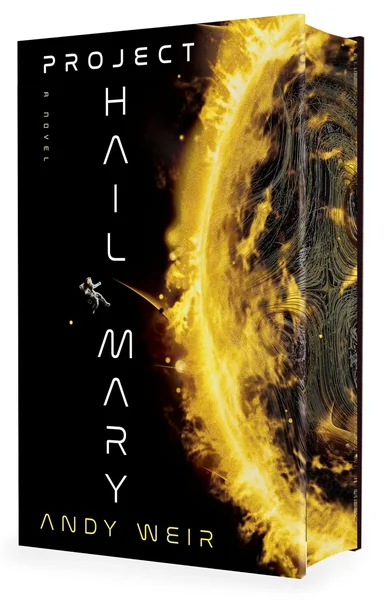
- Readers drawn to Dune's blend of intricate worldbuilding, political intrigue, and philosophical ambition will find a natural companion in Dan Simmons's Hyperion, which similarly layers competing factions, religious mythology, and baroque world-systems into epic science fiction. James S. A. Corey's The Mercy of Gods delivers politically charged interstellar conflict with the same attention to power dynamics and resource competition that drives Dune. For something more optimistic in tone but equally rigorous in its scientific imagination, Andy Weir's Project Hail Mary is a widely recommended gateway for readers who want rich science fiction that rewards sustained attention. Frank Herbert's own Dune Messiah continues Paul Atreides's story directly, deepening the novel's critique of messianic leadership, while Herbert's The White Plague demonstrates the breadth of his interest in systemic, ecological, and political catastrophe.
- Who should read this?
- Dune is best suited to adult readers who enjoy dense secondary-world fiction and are prepared to invest sustained attention across a considerable length. It is an especially strong match for readers interested in political intrigue, ecological systems thinking, and the philosophy of power — particularly those drawn to narratives that complicate rather than celebrate their central hero. Readers who want fast-paced plotting or prefer gentle world-introduction may find it a challenging fit, as Herbert offers no concessions to casual orientation.
- About Frank Herbert
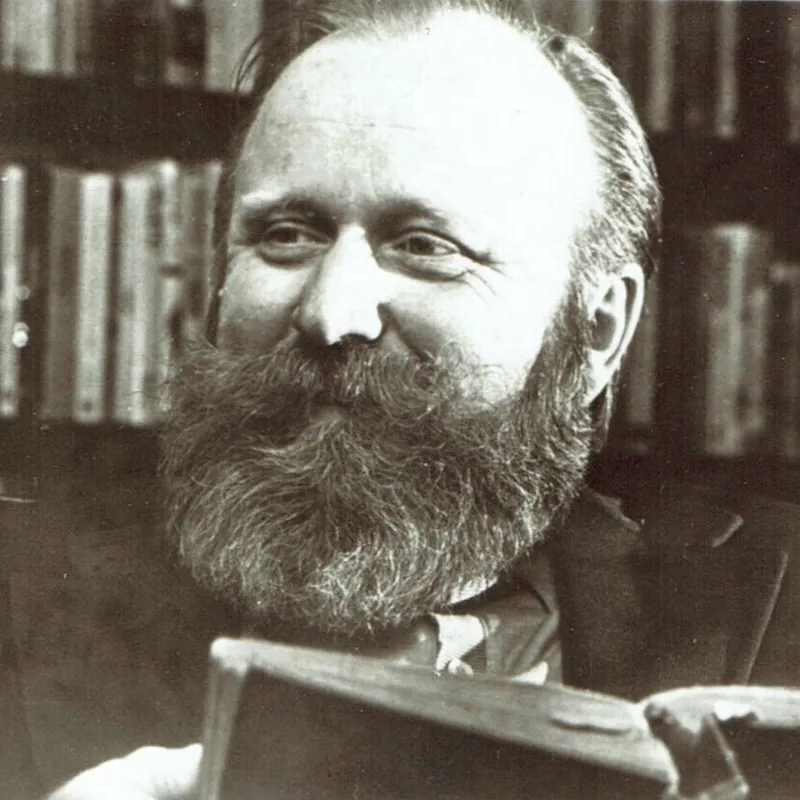
- Frank Herbert is a science fiction author best known for the epic novel Dune, published in 1965, which became one of the most influential works in the genre and spawned a sprawling series of sequels. Dune presents an intricate universe featuring complex political, ecological, religious, and philosophical systems that Herbert developed through years of research — the novel was reportedly written over six years and rejected by 23 publishers before finding a home.
- Tell me about the adaptations
- Dune has a long and complicated adaptation history. A 1984 film directed by David Lynch was received poorly by critics and failed commercially upon release, though it later acquired a cult following — and adaptation of Herbert's dense, multilayered novel has remained a notoriously complex undertaking. The property's cultural afterlife has been described as continuous and contested, reflecting both the novel's enduring importance and the difficulty of translating its scale and philosophical depth to screen.
- What are the main themes?
- Herbert integrates ecology, politics, religion, and the dangers of charismatic power into a single interlocked narrative rather than treating them as separate subjects. The novel's most explicit thematic thread is a warning against hero-worship: Herbert said in 1979 that 'the bottom line of the Dune trilogy is: beware of heroes,' and Paul Atreides's transformation into Muad'Dib is designed to make that warning felt rather than merely stated. The novel also engages resource dependence and imperial overreach through the spice economy — themes that have kept Dune in conversation with successive generations of readers for whom those dynamics carry fresh urgency.
- What's the reading experience like?
- Reading Dune requires sustained attention from the first pages — Herbert's world arrives fully formed and largely unexplained, with proprietary vocabulary (melange, Bene Gesserit, Kwisatz Haderach, Gom Jabbar) and political history accumulating quickly without authorial hand-holding. The novel's density rewards readers willing to move through it at its own pace, with the interlocking complexity paying off most fully for those who commit to its considerable length. Pacing varies significantly: the politically charged opening and climactic close move with thriller energy, while the contemplative middle sections, centered on Paul's life among the Fremen, are markedly slower.
Summarize this book
Follow up
Synthesized from verified book data & published reviews · How we review
What would you like to know about Dune?
Answers come from our editorial notes on this book. If we haven't covered something, we'll say so.
Readers often ask
Our Review
What Dune Is and What Actually Happens
Scope and Ambition: Why It Matters
Strengths: Worldbuilding and Thematic Density
Genuine Limitations: Density and Accessibility
Legacy and Enduring Relevance
Sources & Further Reading
The key facts and claims in this review are grounded in the retrieved, verified sources listed below.
- Cited in this review
- 1
- 2
en.wikipedia.org
- 3
tvtropes.org
- Further reading
- 4
Frank Herbert, LuvemBooks
- 5
- 6
Open Library
Age & Reading Level
Recommended age
Adult
Heat level
Closed door · sex kept suggestive and in the background (Shmoop)
Tropes
From how readers and romance sites describe it, not our own reading.
3 content notes · who it suits
Content to know about
Skip if you want fast-paced plotting with a gradual, welcoming introduction to the story world.
Reader reviews
Be one of the first readers to answer.
Read it? Was it right for you?
Books like Dune
Curated picks for readers who enjoyed Dune, with our reasoning for each match.

More by Frank Herbert

If you liked Dune