
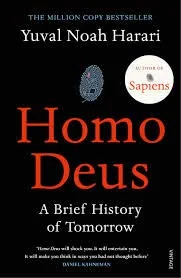
Sapiens
by Yuval Noah Harari
3.5/5
1 book reviewed · 3.5 avg
Harari's ambitious dual work offers accessible big-picture thinking about human history and future, though academic rigor sometimes suffers for the sake of popular appeal.
What works
• Accessible writing style that makes complex macro-level perspectives on human development easy to understand
• Multidisciplinary approach weaving together insights from biology, anthropology, economics, and philosophy into a cohesive narrative
• Provocative reframing of conventional wisdom, such as arguing the Agricultural Revolution was "history's biggest fraud"
• Strong grounding in contemporary research across cognitive science, evolutionary biology, and neuroscience
• Compelling unifying theory that humans succeeded through shared myths and collective fictions like money, nations, and religions
What doesn't
• Overly broad scope that serves as both the greatest strength and most significant weakness
• Heavy reliance on speculation, particularly in Homo Deus when projecting future technological trends