9 min read
4.4
· 30,865 Amazon ratingsShare This Review
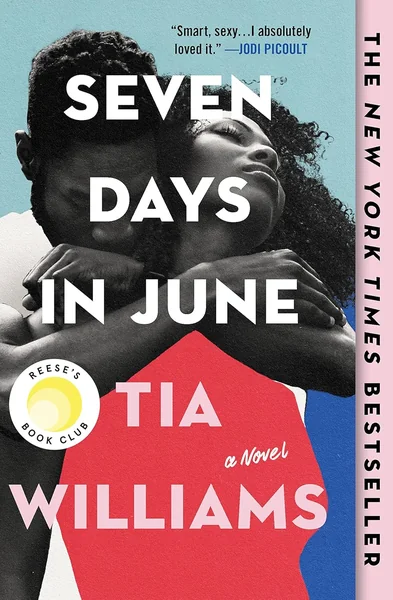
Seven Days in June by Tia Williams Review: A Smart, Sensual Second-Chance Romance
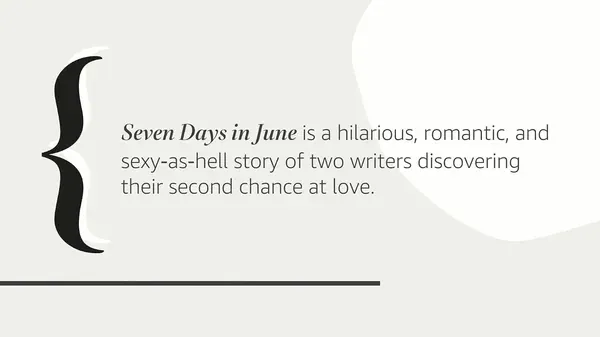
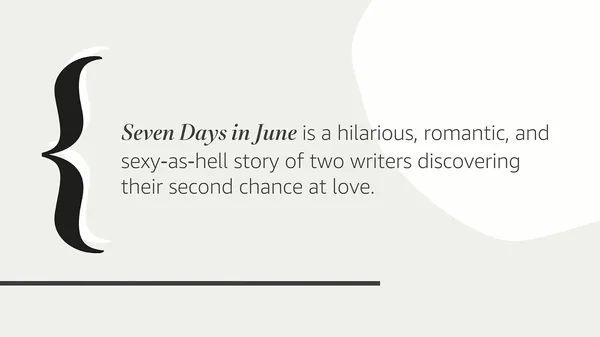
Seven Days in June is a contemporary romance novel by Tia Williams that follows Eva Mercy and Shane Hall — two writers whose lives collided as teenagers and whose reunion as adults forces them to reckon with trauma, growth, and the love they never fully left behind. Praised by outlets including critical coverage, critical coverage, The Week, and PopSugar, it has earned a reputation as one of the standout romance novels of its era, selected as a Reese's Book Club pick and celebrated for balancing wit and sensuality with substantive themes of chronic illness, generational trauma, and Black joy.
 Tap to enlarge
LuvemBooks Verdict
Best for
Readers who want romance fiction with genuine literary ambition — particularly those drawn to explorations of Black creative life in Brooklyn, chronic illness, and intergenerational trauma alongside a deeply felt second-chance love story.
Worth it if
Worth it if you're looking for a romance that earns its emotional payoff through substantive backstory, dual timelines, and a richly specific cultural world — especially if you loved The Perfect Find or are a Reese's Book Club follower seeking something smarter than average.
Skip if
Skip it if you want a breezy, propulsive love story with minimal emotional friction — the thematic weight of poverty, disability, and childhood trauma makes this a more demanding read than lighter genre offerings.
What readers & critics say
Kirkus Reviews called it "a hugely satisfying romance that is electrifying and alive," praising the novel's complex structure as "ultimately rewarding" and its world as "richly layered." Across book blogs and review outlets including BookPage, BookClubChat, and AminasBookshelf, critical consensus converges on the novel's ability to balance genuine wit and steamy romance with substantive themes — with BookPage highlighting "chosen family" as a strong central thread and AminasBookshelf noting that the plot "gave far more than a standard 'will they get together?' Romance," keeping stakes escalating through its dual-timeline structure.
“A hugely satisfying romance that is electrifying and alive — the structure is complex but ultimately rewarding.”
— Kirkus Reviews“Chosen family is a strong central theme, and characters like Eva's spunky daughter Audre bring warmth to the pages.”
— BookPageAsk LuvemBooks
Was this helpful?
- Is it worth reading?
- For readers who want their romance fiction to carry genuine literary ambition, Seven Days in June is widely considered essential. Outlets ranging from Apartment Therapy ('sharp, funny, and thoughtful') to The Week ('zippy and fun to read, but her characters are also complicated individuals') converge on the same verdict: Williams holds sharpness and emotional weight together in a way that feels rare in the genre. Book Riot called it 'an emotional journey you're not soon to forget,' and the breadth of enthusiasm — from lifestyle publications to trade reviewers — suggests its appeal crosses the usual genre-audience divide. The key caveat is that readers seeking a lighter, propulsive romance may find the dual timeline and thematic density more demanding than anticipated.
- Similar books
- Readers drawn to Seven Days in June will find natural companions in several titles. Emily Henry's People We Meet on Vacation shares the second-chance romance structure and alternating timelines, while Beach Read balances wit and emotional weight in a similarly literary register. Robinne Lee's The Idea of You offers another romance with depth and sensuality that crosses into literary fiction territory. Tia Williams' own The Perfect Find — now a Netflix film starring Gabrielle Union — is the clearest companion piece for fans of her voice and cultural milieu. From the curated selections on this page, The Man Who Feels Like Home and Picking Daisies on Sundays are both worth exploring for readers who want emotionally grounded romance with strong character work.
- Who should read this?
- Seven Days in June speaks most directly to readers who want romance fiction to carry genuine literary ambition — those who love a second-chance love story but also want their protagonists shaped by specific, substantive histories. It is particularly resonant for readers interested in Black creative life, the Brooklyn literary world, chronic illness portrayed with nuance, and intergenerational family dynamics. Fans of Tia Williams' earlier work or of Reese's Book Club picks will find it a natural fit, as will readers who gravitate toward romance that engages seriously with motherhood and childhood trauma rather than using those elements as mere backstory.
- Is this a good book club pick?
- Seven Days in June is an excellent book club choice, and its Reese's Book Club selection is a reliable indicator of its discussion potential. The dual timeline structure invites conversation about how Williams uses Eva and Shane's past to frame their adult reunion, while the novel's interlocking themes — chronic illness, generational trauma, motherhood, and Black joy — give groups substantive territory beyond the romance plot. PopSugar's praise for the 'beautiful nod to the sometimes complicated relationships women can have with their mothers' points to one of several threads that tend to generate lively discussion. The fact that the romantic resolution is 'genuinely complicated rather than frictionlessly satisfying' also makes for richer conversation than a more formulaic happy ending would.
- Where should I start with Tia Williams?
- Seven Days in June is widely considered Williams' most celebrated novel and the natural starting point for new readers — its Reese's Book Club selection and broad critical praise make it her highest-profile work. For those who want more after finishing it, The Perfect Find is the other major touchstone in her catalogue, and has the added cultural moment of its Netflix adaptation starring Gabrielle Union. Williams also brings a fifteen-year background as a beauty editor at publications including Elle, Glamour, and Essence, which lends her fiction a particular sharpness of voice and cultural grounding.
- Are there content warnings?
- Seven Days in June deals substantively with chronic illness (Eva's debilitating migraines), addiction and recovery (Shane has been clean for two years), childhood trauma, and poverty — these are woven throughout the narrative rather than appearing briefly. The novel also contains sensual content in keeping with its romance genre roots. Readers with sensitivity to any of these areas should go in prepared for them to be present and treated with some depth, as Williams uses them as core character-building material rather than incidental plot beats.
Summarize this book
Follow up
Synthesized from verified book data & published reviews · How we review
Press Enter to ask. Answers come from our editorial Q&A — start typing to see related questions.
Age & Reading Level
Recommended age
Ages 16+
Reading level
Adult
Content to know about
Best for: Adults / mature 16+ — themes of addiction, childhood trauma, poverty, and sensual content make this best suited to adult readers.
Skip if You're looking for a light, breezy escapist romance with a propulsive single timeline and a frictionless happy ending.
Our Review
What the Novel Is Actually About
Place in the Genre and Cultural Significance
Strengths: Wit, Depth, and Emotional Range
Genuine Limitations and Who May Struggle With It
Who This Book Is For
Sources & Further Reading
The key facts and claims in this review are grounded in the retrieved, verified sources listed below.
- Cited in this review
- 1
livingoutsidethestacks.com
- 2
hachettebookgroup.com
- Further reading
- 3
kirkusreviews.com
- 4
- 5
- 6
bookclubchat.com
- 7
pouringoverbooks.com
- 8
aminasbookshelf.com
- 9
Books like Seven Days in June
Curated picks for readers who enjoyed Seven Days in June, with our reasoning for each match.