BOOKS
Published

Read Time

3 min read

Reader rating

4.6

· 408 Amazon ratings
reader ratings, not a LuvemBooks score
Curated & edited by

LuvemBooks Editorial

How we create our reviews →
Share This Review

The Group Therapy Card Deck by Judith Belmont Review: A Structured Clinical Resource for Group Facilitators

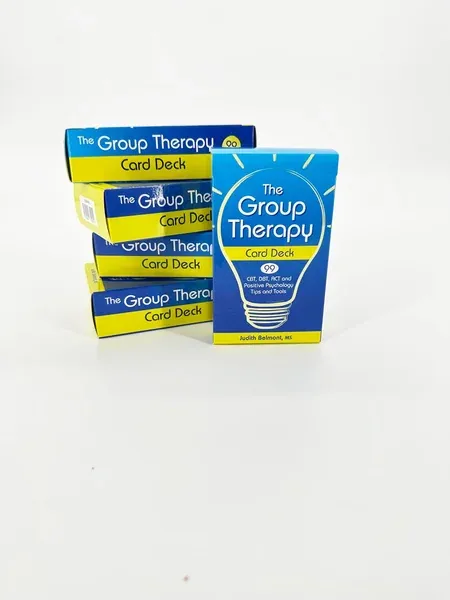
Judith Belmont's *The Group Therapy Card Deck: CBT, DBT, ACT and Positive Psychology Tips and Tools*, published by PESI Publishing in September 2020, is a 99-card professional resource designed to support mental health practitioners running group therapy sessions. Organized across five color-coded sections covering CBT, DBT, ACT, Positive Psychology, and team-building, it positions itself as a ready-to-use facilitation tool that brings evidence-based frameworks directly into the group room. This review covers the deck's content and structure as described by its publisher and available sources, not hands-on clinical use.

LuvemBooks Verdict

Best for

Group therapy facilitators who draw eclectically from CBT, DBT, ACT, and Positive Psychology and need a single, session-ready tool they can navigate quickly mid-group without lengthy preparation.

Worth it if

You run eclectic or introductory therapy groups and want a colour-coded, modality-spanning card deck that reduces prep time and makes evidence-based concepts experiential rather than didactic.

Skip if

Skip it if your practice is exclusively within one modality and you need deep clinical depth, or if you work primarily in individual therapy — the deck's structure is built around group dynamics and cohesion, making it a poor fit for one-on-one or fully self-directed use.

The author's own site (belmontwellness.com) describes the deck as offering experiential group learning and skill-building through activities designed to improve personal development and facilitate group cohesiveness. Aggregated reader ratings reflect broadly positive reception: abebooks.com records a 4.38 out of 5 from Goodreads raters, while the deck carries a 4.6 out of 5 across over 400 Amazon ratings.

Sources: belmontwellness.com, abebooks.com
4.6from 408 Amazon ratings— reader ratings, not a LuvemBooks score
In This Review
  • What Works & What Doesn't
  • What the Deck Contains and How It Is Organized

  • The Breadth of Therapeutic Frameworks Covered
  • Belmont's Standing in the Psychoeducational Space
  • Genuine Strengths: Accessibility and Dual Audience Design
  • Limitations and Audience Fit

What Works & What Doesn't

What Works
  • Five color-coded sections allow facilitators to navigate quickly to a specific modality or activity type during sessions
  • Covers four evidence-based therapeutic frameworks — CBT, DBT, ACT, and Positive Psychology — plus a dedicated team-building section in a single resource
  • Designed for both mental health professionals and self-help readers, widening its practical audience
  • Extends Belmont's established and well-regarded Tips and Tools for the Therapeutic Toolbox series into the group therapy context
  • Holds a 4.38 out of 5 rating on Goodreads, reflecting positive reception among early users
What Doesn't
  • Specialists in a single modality (e.g., dedicated DBT clinicians) receive only 19–20 cards per framework, which may be insufficient for deep, ongoing work without supplementary materials
  • Structured explicitly for group settings, making it a poor fit for practitioners focused primarily on individual therapy or for fully self-directed use
A functional card-deck resource built for group clinicians, The Group Therapy Card Deck translates four major evidence-based modalities into session-ready exercises — a practical extension of Belmont's established Tips and Tools for the Therapeutic Toolbox series.
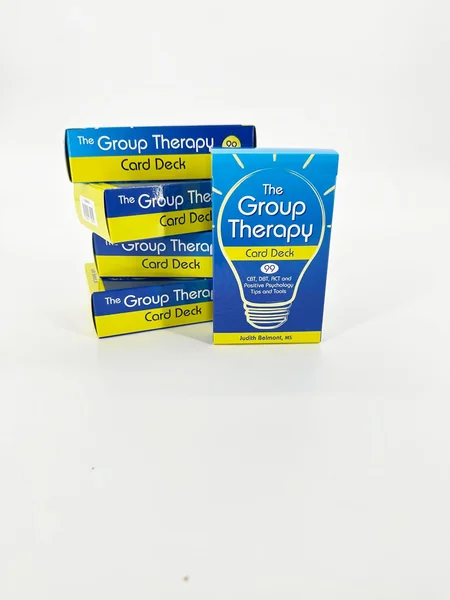
The Group Therapy Card Deck: CBT, DBT, ACT and Positive Psychology Tips and Tools by Judith Belmont front cover

What the Deck Contains and How It Is Organized

The deck comprises 99 cards divided into five color-coded sections, each containing 19 or 20 cards. Four of those sections correspond directly to distinct therapeutic modalities: Cognitive Behavior Therapy (CBT), Dialectical Behavior Therapy (DBT), Acceptance and Commitment Therapy (ACT), and Positive Psychology. The fifth section is devoted to group team-building activities designed to increase cohesion among members. The color-coding system is a deliberate structural choice, allowing facilitators to navigate quickly to a specific modality or activity type without sorting through the full deck mid-session. The publisher describes the deck as offering "practical 'hands on' tips and activities that will provide hours of experiential, therapeutic" engagement — framing each card as a self-contained prompt rather than a lecture script.
practical tips and tools for the psychological toolbox — for mental health professionals and self-help readers alike.

The Breadth of Therapeutic Frameworks Covered

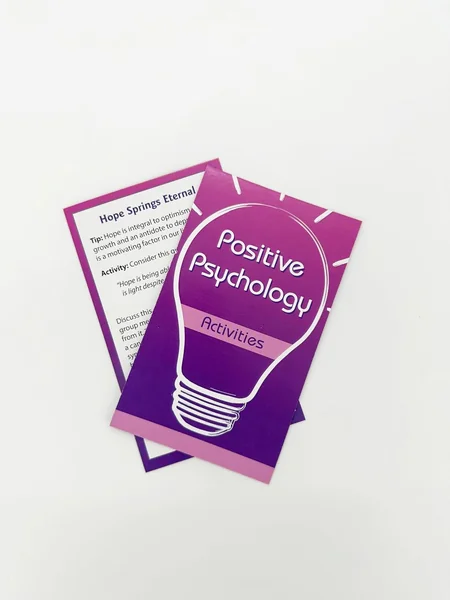
One of the deck's defining design choices is its breadth. Rather than committing to a single modality, it maps four distinct evidence-based approaches onto a single tool. The CBT section is built around identifying and challenging core irrational beliefs to foster healthier thinking patterns. The DBT section offers what the publisher calls a "crash course" on DBT's four main skill modules, making it accessible even to groups encountering dialectical concepts for the first time. The ACT cards center on accepting what cannot be changed and on committing to values-driven goals as a route to self-empowerment. The Positive Psychology section shifts the frame away from pathology entirely, focusing instead on well-being, optimism, and the skills associated with human flourishing. Spanning these four schools of thought in a single deck means the resource is designed to serve facilitators who draw eclectically from the literature rather than those who work exclusively within one model.

Belmont's Standing in the Psychoeducational Space

Judith Belmont is described by the publisher as a "renowned psycho-educational learning expert" and the author of the Tips and Tools for the Therapeutic Toolbox series, which the source characterizes as "highly praised." This deck is a direct extension of that series, applying the same psychoeducational philosophy — accessible, activity-driven skill-building — to the specific context of group work. Belmont's design intent, as reflected across the source material, is to make evidence-based concepts experiential rather than didactic: the goal is group members learning through doing, with activities intended to build personal development and social skills while reinforcing group cohesiveness and support. The deck carries a 4.38 out of 5 rating across Goodreads ratings, reflecting a positive early reception among clinicians and self-help readers who have engaged with it.

Genuine Strengths: Accessibility and Dual Audience Design

The deck is explicitly designed for two overlapping audiences: mental health professionals facilitating groups and self-help readers seeking structured psychological tools. This dual positioning is relatively uncommon in clinical card formats, which typically address only the practitioner. By writing the cards to be accessible to general readers as well, Belmont widens the potential use case — the deck is described by the publisher as offering "practical tips and tools for the psychological toolbox — for mental health professionals and self-help readers alike." For facilitators, the color-coded structure reduces preparation time; for lay readers, the modular, card-by-card format lowers the barrier to engaging with CBT, DBT, and ACT concepts that can feel opaque in textbook form. The team-building section adds a further layer of utility, addressing group dynamics and cohesion separately from the modality-specific content.

Limitations and Audience Fit

The deck's breadth, while a strength for eclectic practitioners, is also a natural constraint for specialists. A clinician whose practice is exclusively DBT-focused, for instance, receives only 19 or 20 cards on that modality out of 99 total — enough for introductory and rotating group exercises, but not the depth of a dedicated DBT workbook or curriculum. Similarly, because the deck is designed for group settings, individual practitioners or those working primarily in one-on-one sessions will find much of its structure misaligned with their context. The format is built around group dynamics, cohesion, and shared experiential activities; its value in individual therapy or purely self-directed use is secondary to its core purpose. Facilitators with highly specialized or advanced groups may find themselves needing to supplement the deck with modality-specific resources for deeper clinical work.

Sources & Further Reading

The key facts and claims in this review are grounded in the retrieved, verified sources listed below.

  1. Cited in this review
  2. 1
  3. 2
  4. 3
  5. Further reading
  6. 4
  7. 5