8 min read
4.5
· 40,198 Amazon ratingsShare This Review
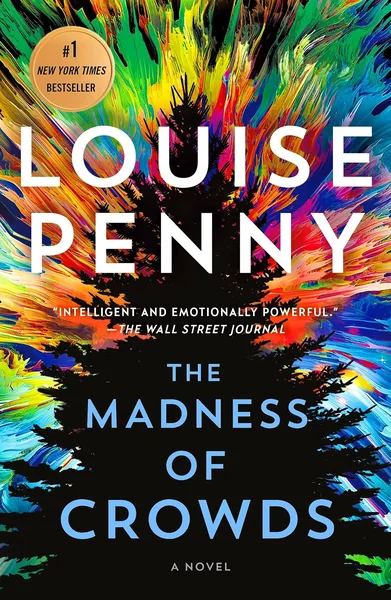
The Madness of Crowds by Louise Penny Review: A Gripping, Morally Charged Mystery
The seventeenth Chief Inspector Gamache novel finds Armand Gamache drawn into a volatile ethical firestorm when a statistics professor's lecture threatens to ignite the quiet village of Three Pines — and a murder forces him to untangle ideology, fear, and justice all at once. An instant #1 New York Times bestseller, the novel is praised by Mystery Scene Magazine as "another brilliant entry" in a series celebrated for its emotional depth and intellectual richness.
LuvemBooks Verdict
Best for
Devoted fans of the Gamache series who want crime fiction that wrestles seriously with ideology, post-pandemic social fracture, and genuine moral dilemmas — without sacrificing the warmth of Three Pines or the propulsive pull of a well-constructed mystery.
Worth it if
You've read enough of the prior sixteen Gamache novels to feel the full emotional weight of the relationships and recurring themes, and you want a thriller that asks hard ethical questions rather than simply entertaining you.
Skip if
You're new to the series looking for a standalone entry point, or you want light, escapist crime fiction — Penny's direct engagement with post-pandemic division and morally loaded ideology makes this a demanding, not comforting, read.
What readers & critics say
Bookmarks.reviews synthesises critical consensus describing the novel as "one of the richest and most satisfying banquets yet" and "timely and thrilling," calling it one of the series' most rewarding entries as both procedural and community portrait. Louisepenny.com cites CrimeReads praising Penny as among the first crime writers to tackle the pandemic head-on, mapping "both the rewards and the pitfalls facing society," and declaring the novel one of the best in her now iconic series; Kirkus Reviews, meanwhile, acknowledges Penny's unmatched balance of "tight plotting, compassion for her flawed characters, and a broader vision of humanity," though it characterises the book as a "distinctly minor work" in her canon — a dissenting note amid otherwise strong critical enthusiasm.
“No one balances tight plotting, compassion for her flawed characters, and a broader vision of humanity like Penny.”
— Kirkus ReviewsAsk LuvemBooks
Was this helpful?
- Is it worth reading?
- For readers already invested in the Gamache series — or for anyone who wants crime fiction that takes ideas seriously — The Madness of Crowds represents the series operating at the height of its powers. BookPage awarded it a starred review, calling it 'easily one of the best mystery novels (or novels of any genre) in recent memory,' while the St. Louis Post-Dispatch described it as 'one of the richest and most satisfying banquets yet.' The central moral question — Gamache saves a life he finds morally abhorrent; what would you do? — is the kind of challenge that lingers well past the final page. The main caveat is that newcomers will miss emotional payoffs built across sixteen prior novels, and those seeking lighter procedural fare may find Penny's ambitions here demanding rather than comforting.
- Similar books
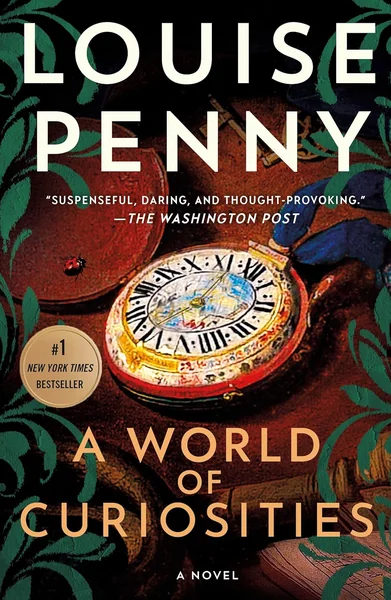
- Readers who enjoy the moral seriousness and atmospheric regional setting of The Madness of Crowds will find strong companions in several directions. Louise Penny's own A World of Curiosities (the eighteenth Gamache novel) is the natural next step for series readers. For atmospheric crime fiction with deep character work, Tana French's In the Woods and Elizabeth George's A Great Deliverance offer comparable literary ambition. Jane Harper's The Dry delivers similarly sun-bleached, character-driven tension in an Australian rural setting. For a different flavour of procedural suspense, I See You by Elle Gray is also worth exploring.
- Who should read this?
- The Madness of Crowds is written for adult readers of literary crime fiction who want their mysteries to carry real moral and intellectual substance. It is especially rewarding for existing fans of the Chief Inspector Gamache series, who will draw on sixteen novels' worth of emotional context with Gamache, Beauvoir, and the village of Three Pines. Readers drawn to fiction that grapples seriously with contemporary social fracture — the aftermath of COVID-19, the ethics of ideology and academic freedom, and the limits of personal moral conviction — will find Penny's approach unusually ambitious for the genre. It is not recommended for those seeking light, escapist crime fiction.
- About Louise Penny
- Louise Penny is a Canadian crime-fiction author, best known for her Chief Inspector Armand Gamache series set in Quebec.
- How does this compare to other Gamache novels?
- The Madness of Crowds is widely regarded as one of the strongest entries in the series. The St. Louis Post-Dispatch called it 'one of the richest and most satisfying banquets yet,' and Mystery Scene Magazine declared it 'another brilliant entry' — praise that positions it firmly among the series' best. What distinguishes it within the canon is the directness with which it engages contemporary events: post-pandemic social fracture and a genuinely provocative ideological antagonist in Professor Abigail Robinson give this installment an unmistakably urgent charge that some earlier Gamache novels carry less explicitly.
- Where should I start with this author?
- For readers new to Louise Penny, the Chief Inspector Gamache series rewards being read in order from the beginning. Still Life, the first novel, introduces Gamache, Jean-Guy Beauvoir, and the village of Three Pines, establishing the emotional and narrative foundation that makes later entries — including The Madness of Crowds — so resonant. Starting at book seventeen means arriving without sixteen novels of relationship and community history that Penny's long-running fans bring to every page.
Summarize this book
Follow up
Synthesized from verified book data & published reviews · How we review
Press Enter to ask. Answers come from our editorial Q&A — start typing to see related questions.
Age & Reading Level
Recommended age
Adult
Reading level
Adult
Content to know about
Skip if you're looking for light or escapist crime fiction — this novel is deliberately demanding in its moral and ideological ambitions.
Our Review
What the Novel Is Actually About
Significance and Place in the Series
Strengths: Moral Weight and Narrative Drive
The Three Pines World and Its Emotional Core
Who This Book Is For — and Where It Demands More
Sources & Further Reading
The key facts and claims in this review are grounded in the retrieved, verified sources listed below.
- Cited in this review
- 1
- 2
- 3
sheila-allenavelin.squarespace.com
- Further reading
- 4
Louise Penny, Wikipedia
- 5
unabridgedbookstore.com
- 6
gamacheseries.com
- 7
goodreadingmagazine.com.au
- 8
- 9
tatteredcover.com
- 10
us.macmillan.com
- 11
Books like The Madness of Crowds
Curated picks for readers who enjoyed The Madness of Crowds, with our reasoning for each match.