BOOKS
Published

Read Time

10 min read

Curated & edited by

LuvemBooks Editorial

How we create our reviews →
Share This Review

Pedro Pan: Learning to Dance by Mario García Review: A Pedro Pan Child's Six-Decade American Journey

Mario García's memoir recounts his 1962 flight from Havana to Miami at fourteen as one of Operation Pedro Pan's 14,000 unaccompanied children, and the six decades that followed — from a Florida newsroom to redesigning The Wall Street Journal and The Washington Post. A personal chapter of Cuban-American history from a man who became one of news design's biggest names.

LuvemBooks Verdict

Best for

Readers of Cuban-American and immigration history who want Operation Pedro Pan in a firsthand voice — especially those in journalism or media design curious about the personal story behind the designer of The Wall Street Journal and Washington Post redesigns.

Worth it if

Worth it if you value a compact, firsthand Pedro Pan account whose destination — the top of the global news-design profession — takes the Cuban-exodus narrative somewhere earlier memoirs, like Carlos Eire's, do not go.

Skip if

Skip it if you want a deeply developed, full-scale life story or prefer books vetted by an established critical consensus — at 178 self-published pages, six decades are necessarily compressed, and no review record exists yet.

As a self-published title scheduled for September 2026, the book has no retrieved professional reviews or reader consensus yet; the author's own LinkedIn post frames it as his most personal book, about "what it costs, and what it gives back, to learn an entirely new way of moving through the world." Separately, a 2013 Tampa Bay Business Journal profile documented the same arrival story the memoir draws on — the "Hands off!" Admonishment that was García's first English phrase at a Miami junior high — underscoring that interest here rests as much on the memoirist as on advance critical notice.

Sources: LinkedIn, Tampa Bay Business Journal

Age & Reading Level

Recommended age

Adult

Reading level

Adult

Content to know about

a fourteen-year-old's permanent separation from his parents as an unaccompanied child refugee

Skip if you want a sweeping, deeply granular life story — six decades are compressed into a deliberately compact 178-page volume

In This Review
  • What Works & What Doesn't
  • What the Book Is
  • The Arc: From Pedro Pan to News Design
  • The Author Behind the Story
  • Why the Timing Resonates
  • Limitations and Fit

What Works & What Doesn't

What Works
  • A firsthand memoir of Operation Pedro Pan, the 1960–1962 exodus of more than 14,000 unaccompanied Cuban children
  • Traces a remarkable arc from a fourteen-year-old's arrival in Miami to the redesign of The Wall Street Journal and The Washington Post
  • Written by a globally recognized news designer with more than 750 redesign projects across 122 countries
  • Adds a personal voice to a history now drawing renewed attention, including a feature film in development
  • A compact, accessible read at 178 pages
What Doesn't
  • Self-published through the author's own Garcia Media imprint, without an outside editorial house
  • At 178 pages, six decades of life and career are compressed into a short volume
  • As a forthcoming title, it carries no established readership or critical consensus yet
  • Its niche focus on Pedro Pan and news design will suit some readers more than general memoir audiences
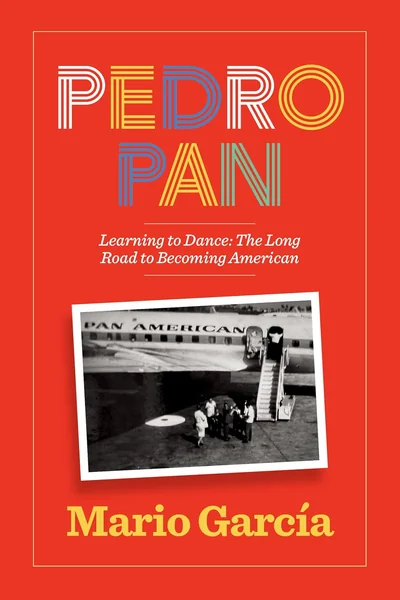
A compact, firsthand Pedro Pan memoir whose interest rests as much on who wrote it as on what it recounts.
Pedro Pan Learning to Dance: The Long Road to Becoming American by Mario Garcia front cover

What the Book Is

Pedro Pan: Learning to Dance — The Long Road to Becoming American is a memoir by Mario García, the newspaper designer and media consultant, published through his own Garcia Media imprint and scheduled for September 15, 2026. Its premise is rooted in one of the most striking chapters of Cuban-American history: in February 1962, fourteen-year-old Mario García boarded a flight from Havana to Miami, alone. He was one of more than 14,000 unaccompanied Cuban children sent to the United States between 1960 and 1962 under what became known as Operation Pedro Pan — an exodus driven by parents who feared what the Castro regime would mean for their children's futures.
The book covers the six decades that followed that flight. According to the publisher's description, it traces a teenager's collision with a country he did not yet understand, a career that carried him from a Florida newsroom to the redesign of The Wall Street Journal and The Washington Post, and a life spent becoming American. The book's own account of his arrival includes a telling detail: the first English phrase the fourteen-year-old encountered in a Miami junior high school was an admonishment to keep his hands to himself — a fittingly brusque welcome to a new country.

The Arc: From Pedro Pan to News Design

What distinguishes this memoir from other Pedro Pan accounts is the destination of its story, not just its departure point. Operation Pedro Pan has been documented in scholarship and in earlier memoirs — Carlos Eire's Learning to Die in Miami among them — but García's trajectory took him somewhere few of those narratives go: to the top of the global news-design profession. The subtitle's "long road to becoming American" runs through American journalism itself.
The publisher's synopsis frames the book as the story of those six decades, moving from the disorientation of a teenage arrival to a career reshaping how some of the world's largest newspapers look and function. For readers interested in the immigrant story as a professional story — how a child refugee built authority inside the very institution of the American press — that is the memoir's central promise.

The Author Behind the Story

García arrives at this memoir with an unusually documented public profile. He is Senior Adviser on News Design and an adjunct professor at Columbia University's Graduate School of Journalism, which he joined in 2013 as the Hearst Digital Media Professor in Residence, and he is the CEO and founder of Garcia Media, a consulting firm specializing in newsroom transformation, design strategy, and mobile-first storytelling. His firm's biography credits him with leading more than 750 redesign and innovation projects across 122 countries, for clients that have included The Wall Street Journal, The Washington Post, the South China Morning Post, Aftenposten, and Handelsblatt, alongside training work for outlets such as The Times of London and the Singapore Straits Times.
That résumé matters to the reading experience in two ways. First, it means the memoirist is himself a primary source on a consequential era in newspaper history, not merely a commentator on it. Second, it means readers get the Pedro Pan story told by someone who has spent a lifetime thinking about how stories are structured and presented — the memoir's very existence is an extension of a career in storytelling.

Why the Timing Resonates

The memoir lands amid a visible revival of interest in Operation Pedro Pan. A feature film dramatizing the operation, directed by Richie Adams and featuring Néstor Carbonell, Andy García, Danny Pino, and Paz Vega, was announced in 2025. The historical record itself continues to be refined — public accounts note that although Pedro Pans are often pictured as small children, most were in fact teenage boys, which is precisely the vantage point García writes from, having made the journey at fourteen.
That context gives the book a dual appeal: it works both as an addition to the literature of the Cuban exodus and as a personal complement to a story that is about to reach a much wider audience through film. Readers coming to the topic fresh, or returning to it, get the experience in the voice of someone who lived it rather than reconstructed it.

Limitations and Fit

This is a self-published work, issued through the author's own Garcia Media imprint rather than an outside publishing house, so it has not passed through a traditional editorial gatekeeping process — readers who weigh that heavily should know it going in. At a print length of 178 pages, it is also a deliberately compact book; six decades of life, migration, and a globe-spanning career are compressed into a short volume, which means breadth over depth in places. As a forthcoming title, it has not yet built the readership or review record that longer-established Pedro Pan memoirs carry, so early buyers will be forming their own judgments rather than following a consensus.
The fit, though, is clear: this is for readers of Cuban-American and immigration history, for those curious about Operation Pedro Pan beyond the statistics, and for anyone in journalism or media design who wants the personal story behind one of the field's most recognizable names. It is a memoir first and a media-industry book second — the newsroom triumphs are the second half of a story that begins with a fourteen-year-old stepping off a plane alone.

Sources & Further Reading

The key facts and claims in this review are grounded in the retrieved, verified sources listed below.

  1. Cited in this review
  2. 1
  3. 2
  4. 3
  5. Further reading
  6. 4
  7. 5
  8. 6
  9. 7

    artepublicopress.com