BOOKS
Published

Read Time

7 min read

Reader rating

4.3

· 495 Amazon ratings
reader ratings, not a LuvemBooks score
Curated & edited by

LuvemBooks Editorial

How we create our reviews →
Share This Review

Up from the Blue by Susan Henderson Review: A Haunting Debut of Family and Loss

Up from the Blue is Susan Henderson's debut novel (Harper Perennial), following eight-year-old Tillie after her mother mysteriously vanishes in 1970s America. Part mystery, part coming-of-age story, it turns on family shame and the stigma of mental illness.

LuvemBooks Verdict

Best for

Readers of literary family dramas — especially those drawn to mother-daughter stories, compassionate fiction about mental illness, and 1970s-set coming-of-age narratives in the vein of The Glass Castle.

Worth it if

Worth it if you value emotional truth over plot mechanics — its dual timeline and its honest interest in whether a daughter can forgive a mother who left and a father who kept silent are what admirers consistently single out.

Skip if

Skip it if you want a propulsive whodunit — the mystery of the mother's disappearance is secondary to the emotional portrait, and the sustained heaviness of a child's experience of a parent's illness is unrelenting by design.

Fiction Writers Review praised the debut for perfectly balancing Tillie's twin crises across its dual timeline, and RevWords admired how it spotlights the stigma of mental illness and one family's shame. Book bloggers Leeswammes and Maggie Smith, Writer both recommended it to fans of dysfunctional-family and coming-of-age fiction, while BookBrowse carried critical coverage's verdict of "rapturous prose" and "a triumphant debut."

Sources: Fiction Writers Review, Leeswammes' Blog, Maggie Smith, Writer, RevWords, BookBrowse
4.3from 495 Amazon ratings— reader ratings, not a LuvemBooks score
Buy on Amazon

Age & Reading Level

Recommended age

Ages 16+

Reading level

Adult

Content to know about

a parent's bipolar illness and psychiatric hospitalization-era stigma
a mother's unexplained disappearance
sustained family estrangement and parent-child conflict

Best for: Adults / mature 16+ — written as adult literary fiction; its sustained treatment of a mother's bipolar illness, disappearance, and a family's shame is pitched at adult readers.

Skip if you want a propulsive whodunit — the mystery of the mother's disappearance is secondary to the emotional family drama, and the pacing reflects that.

In This Review
  • What Works & What Doesn't
  • A Disappearance at the Center of a Childhood
  • Two Timelines, One Wound
  • Mental Illness, Shame, and the 1970s
  • Reception and Where It Falls Short
  • Who This Book Is For

What Works & What Doesn't

What Works
  • A tightly constructed dual timeline: young Tillie uncovers what happened to her mother while adult Tillie confronts the lasting estrangement it caused
  • Treats bipolar illness and 1970s-era stigma as the emotional core, not a plot device — praised in jacket copy as a 'sensitively written' portrait of a family in crisis
  • Richly grounded setting: desegregation, school busing, and early feminism frame the family's private shame
  • Strong pedigree for a debut — Henderson is a Pushcart Prize nominee, with praise quoted from the New Zealand Herald and New Zealand Woman's Weekly
  • Appeals to fans of The Glass Castle and novelists like Jennifer McMahon and Katrina Kittle
What Doesn't
  • The mystery is secondary to the emotional drama — readers expecting a propulsive whodunit may find it slow
  • Heavy subject matter throughout: a mother's mental illness, a disappearance, and a family's sustained silence
  • Documented reception is warm but modest in scale — a quietly praised literary debut rather than a widely reviewed bestseller
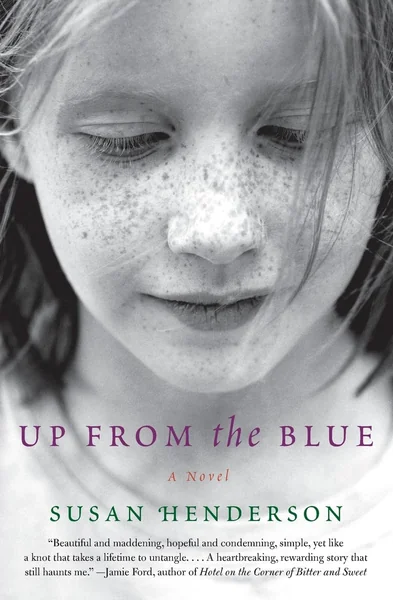
Up from the Blue earns attention as a quiet, emotionally precise debut about a daughter's refusal to stop searching for the truth about her missing mother.
Up from the Blue: A Powerful Coming-of-Age Story of Family, Mental Illness, and Mystery in 1970s America by Susan Henderson front cover

A Disappearance at the Center of a Childhood

The premise of Susan Henderson's debut novel is simple and devastating: Tillie is eight years old when her mother vanishes without explanation, and the rest of her life is shaped by the absence. Published by Harper Perennial in September 2010, the novel follows young Tillie's startling discoveries about what actually happened to her mother, interwoven with a grown Tillie whose relationships remain, as one early reader account put it, stuck in the past. The mother at the story's center is a 1970s housewife living with bipolar illness, and the novel is fundamentally about what a family does — and hides — when one of its members is unwell in an era with little language or tolerance for it.

Two Timelines, One Wound

Henderson structures the book around Tillie at two ages: the imaginative child trying to make sense of the disappearance in real time, and the adult still negotiating the fallout. This dual perspective is the engine of the book's mystery element — the publisher describes it as "part mystery, part coming-of-age" — because the reader learns the truth alongside young Tillie while watching grown Tillie reckon with its consequences. The design lets Henderson examine how childhood misunderstanding hardens into adult estrangement, and how the stories families tell to protect themselves can do their own damage. The strained relationship at the book's core, between Tillie and her father, has been frozen since the year her mother vanished, and the novel treats thawing it as its own kind of suspense.

Mental Illness, Shame, and the 1970s

The setting is not decoration. The novel unfolds against a tumultuous period in American life — desegregation, school busing, and the early rise of modern feminism — and uses that backdrop to frame its central subject: the stigma of mental illness and the heartbreaking outcome of one family's shame. Henderson's authorial intent is on record in her own comments about the book: she has described writing it as an act of healing, saying she learned about love and acceptance of, and even a kind of glory in, people's shortcomings, and that she hoped the story would heal something in her readers as well. That ambition places the novel in the company of family-dysfunction fiction that treats mental illness with seriousness rather than as a plot device — publisher comparisons point readers toward Jennifer McMahon, Katrina Kittle, and Laura Kasischke, and at least one reader reached for Jeannette Walls's The Glass Castle as the nearest reference point.

Reception and Where It Falls Short

Advance and early praise, carried in the publisher's materials, was warm. Sarah-Kate Lynch in New Zealand Woman's Weekly called it an incredibly accomplished debut and "totally enthralling," while Nicky Pellegrino in the New Zealand Herald praised it as an engrossing and sensitively written portrait of a family struggling with mental illness. Henderson arrived with real credentials for a first novelist — a Pushcart Prize nomination and a visible presence as the founder of the writers' community LitPark.com — and the book found champions beyond print reviews, including a public shout-out from Rosie O'Donnell. Readers should nonetheless calibrate expectations: this is a small-press-feeling literary debut rather than a breakout with a vast documented readership, and its strengths are quiet ones. Those who come for a propulsive whodunit may find the mystery secondary to the emotional portrait, and the subject matter — a mother's illness, a family's silence — is heavy going by design.

Who This Book Is For

Up from the Blue suits readers of literary family dramas who value character and emotional truth over plot mechanics — those drawn to mother-daughter stories, to fiction about mental illness handled with compassion, or to 1970s-set coming-of-age narratives. At 336 pages in its Harper Perennial paperback edition, it is a compact, self-contained read rather than an undertaking. Its honest interest in forgiveness — in whether a daughter can understand a mother who left, and a father who let the silence stand — is the thing its admirers consistently single out, and the thing most likely to stay with a reader after the last page.

Sources & Further Reading

The key facts and claims in this review are grounded in the retrieved, verified sources listed below.

  1. Cited in this review
  2. 1

    harpercollins.ca

  3. Further reading
  4. 2
  5. 3
  6. 4
  7. 5
  8. 6
  9. 7