9 min read
3.8
· 8,914 Amazon ratingsShare This Review
Half His Age: A Novel by Jennette McCurdy Review: A Scorching, Deliberately Uncomfortable Debut
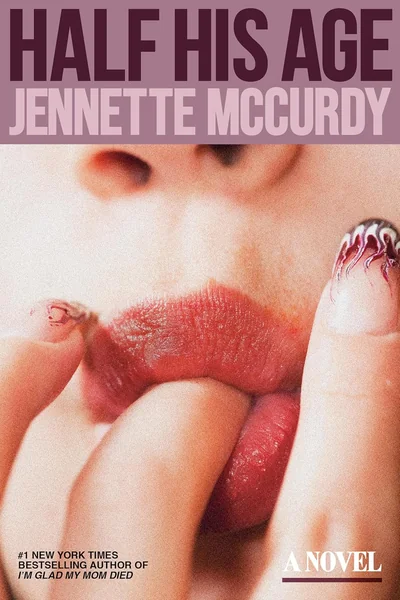
Half His Age, Jennette McCurdy's debut novel published by Ballantine Books on January 20, 2026, is a New York Times bestseller that follows Waldo, a seventeen-year-old high school senior in Anchorage, Alaska, who pursues a relationship with her creative writing teacher, Mr. Korgy. McCurdy frames the novel as an exploration of female rage, power, and desire, and the result is a character study that major outlets received as provocative and deliberately discomfiting — earning both strong praise and pointed criticism for its execution.
LuvemBooks Verdict
Best for
Readers drawn to female-interiority fiction built around rage, desire, and moral ambiguity — particularly fans of McCurdy's memoir I'm Glad My Mom Died who want to follow her into literary fiction on similarly uncomfortable emotional terrain.
Worth it if
You can sit with a deliberately contradictory protagonist and a situation that refuses redemptive arcs or tidy moral verdicts, and you respond to dark, blunt prose that treats discomfort as a feature of the reading experience.
Skip if
You prefer difficult subject matter handled with narrative restraint and tonal balance — critics found the novel unbalanced and reliant on repetitive shock value, so readers expecting literary finesse to match the book's ambitions may come away frustrated.
What readers & critics say
Kirkus Reviews called it "a debut novel with bright spots, but unbalanced and lacking in finesse," crediting Waldo's contradictory characterisation while criticising structural unevenness. The Guardian recognised McCurdy's continuation of her memoir's thematic preoccupations — blurred parent-child boundaries and lost identity — noting solid one-liners that feel drawn from a sitcom writers' room, while bookmarks.reviews described it as a bold novel "for edge-seekers, doom-scrollers, latchkey kids, horn-dogs and all those who love hard," invoking Nabokovian echoes alongside Bret Easton Ellis.
“A debut novel with bright spots, but unbalanced and lacking in finesse.”
— Kirkus Reviews“McCurdy continues to shake open a Pandora's box, shedding light on blurred parent-child boundaries and loss of identity, with solid one-liners that feel straight out of a sitcom writers' room.”
— The GuardianAsk LuvemBooks
Was this helpful?
- Is it worth reading?
- For readers drawn to dark, voice-driven character studies built around female interiority, rage, and desire, Half His Age delivers a genuinely distinctive and discomfiting experience. Ann Patchett, writing in Oprah Daily, said McCurdy "gets at some hard truths about what we want out of relationships, and what we actually get," and Elle declared that any doubt about whether McCurdy's memoir narrative command could translate to fiction should "henceforth be put to rest." The key caveat: critics noted the novel is "unbalanced and lacking in finesse," with repetitive sex scenes and shock value that can undercut the deeper character work. It rewards readers willing to sit with moral ambiguity but may frustrate those expecting the craft to match the ambition throughout.
- Similar books
- Readers drawn to Half His Age may find similar provocation in several of the curated titles below. Earl, Honey by D.S. Getson and Demon Copperhead by Barbara Kingsolver both work in the register of literary fiction that foregrounds damaged, contradictory characters navigating abusive or exploitative dynamics with psychological realism rather than moral tidiness. Beyond the catalogue, I'm Glad My Mom Died — McCurdy's own memoir — remains the most direct companion piece, sharing the same emotional DNA of suppressed rage and dysfunctional relationships. Lolita by Vladimir Nabokov and My Absolute Darling by Gabriel Tallent are frequently cited reference points for fiction that refuses to moralize about deeply uncomfortable subject matter, while Conversations with Friends by Sally Rooney and The Virgin Suicides by Jeffrey Eugenides share the novel's interest in female interiority and the politics of desire.
- Who should read this?
- Half His Age is designed for adult readers willing to sit with a protagonist who is not made sympathetic in conventional ways and a situation that is not resolved through moral clarity. Critical coverage described it as a novel "for edge-seekers, doom-scrollers, latchkey kids, horn-dogs, and all those who love hard" — a description that captures its intended readership accurately. Readers who came to McCurdy through I'm Glad My Mom Died and responded to its raw emotional honesty will find familiar territory here, now translated into fiction. It is not for readers seeking a redemptive coming-of-age arc, a straightforward critique of predatory dynamics, or difficult subject matter handled with narrative restraint.
- About Jennette McCurdy
- Jennette McCurdy is an American writer and former actress.
- What are the main themes?
- McCurdy frames Half His Age as an exploration of female rage, power, and desire. Critical coverage described it as "a thorny examination of power, lust, shame and rage," and the novel's central concern is what Waldo's suppressed anger — rooted in an unstable home life and her hunger for genuine attention — reveals about the dynamics of want and exploitation. Ann Patchett, writing in Oprah Daily, noted that McCurdy "gets at some hard truths about what we want out of relationships, and what we actually get." The novel also engages with the politics of moral framing itself: by making Waldo the aggressor and Mr. Korgy banal rather than villainous, McCurdy deliberately resists the tidiness of a victimhood or predator narrative.
- How does it hold up as a debut novel?
- Half His Age marks a credible and ambitious transition from bestselling memoir to literary fiction — Elle declared that doubts about whether McCurdy's narrative command could carry over to fiction should "henceforth be put to rest." The novel debuted as a New York Times bestseller and drew praise from major literary voices including Ann Patchett. However, critics also noted it is "unbalanced and lacking in finesse," suggesting the execution does not fully match the ambition — a tension common in debut fiction that reaches for difficult subject matter with genuine seriousness.
Summarize this book
Follow up
Synthesized from verified book data & published reviews · How we review
Press Enter to ask. Answers come from our editorial Q&A — start typing to see related questions.
Age & Reading Level
Recommended age
Adult
Reading level
Adult
4 content notes · who it suits
Content to know about
Best for: Adults only — explicit sexual content and a deliberately morally unresolved relationship between a seventeen-year-old and her adult teacher make this unsuitable for teen readers despite the teenage protagonist.
Skip if you want difficult subject matter handled with narrative restraint, tonal balance, or moral clarity.
Our Review
What the Novel Is and What It Does
Significance: From Memoir Powerhouse to Fiction Debut
What the Novel Does Well
Genuine Limitations: Where Critics Push Back
Who This Novel Is For
Sources & Further Reading
The key facts and claims in this review are grounded in the retrieved, verified sources listed below.
- Cited in this review
- 1
en.wikipedia.org
- 2
- 3
penguinrandomhouse.com
- Further reading
- 4
Jennette McCurdy, Wikipedia
- 5
- 6
- 7
- 8
bookbrowse.com
- 9
- 10
bookmarks.reviews
- 11
Books like Half His Age
Curated picks for readers who enjoyed Half His Age, with our reasoning for each match.