6 min read
Share This Review
The Iron Crossing by Gregory Scott Review: A New Thriller from a Law-Enforcement Veteran
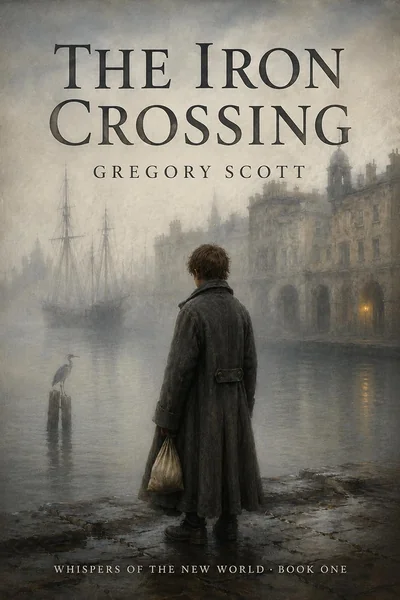
The Iron Crossing is a 2026 thriller published by Taylane Publishing, written by Gregory Scott — the city police detective, digital forensics examiner, and author behind the eight-book Blake Brier series. The novel marks Scott's latest foray into crime and suspense fiction, shaped by his sixteen years in law enforcement investigating cases ranging from homicide to cybercrime.
LuvemBooks Verdict
Best for
Readers of contemporary crime and police procedurals who value authentic investigative detail and want a thriller written by an active law enforcement professional — especially existing fans of the Blake Brier series looking for Scott's next move after Quarry.
Worth it if
You prize procedural credibility above all and want a thriller underpinned by sixteen years of real homicide and cybercrime investigation experience from an author who has already proven he can sustain a loyal readership across eight novels.
Skip if
You are expecting a continuation of the Blake Brier series, or you prefer to wait until a body of independent reader and critical reviews has accumulated before committing to a brand-new 2026 release.
What readers & critics say
No substantive critical or reader reviews of The Iron Crossing have accumulated at the time of this editorial, as it is a May 2026 publication. Booknotification.com records that Scott's debut Blake Brier novel Unmasked remains his most-read tracked title, indicating a loyal established readership that the new title is well-positioned to inherit.
Sources: booknotification.comAsk LuvemBooks
Was this helpful?
- Is it worth reading?
- For fans of procedural crime fiction who value an author whose professional life directly informs their work, The Iron Crossing carries a compelling premise: Scott is a working police detective and digital forensics examiner, not a writer working from research alone. His Blake Brier series demonstrated sustained readership across eight novels, signalling reliable plotting and procedural grounding. The main caveat is that, as a 2026 release, independent reviews have not yet accumulated — readers entirely new to Scott may want to start with Unmasked from the Blake Brier series before committing.
- Similar books
- Readers drawn to The Iron Crossing's blend of historical setting and crime-inflected suspense will find strong companions in the curated titles below. We Were the Lucky Ones by Georgia Hunter and The Things We Cannot Say offer emotionally grounded historical fiction with high narrative stakes. March by Geraldine Brooks and The Four Winds by Kristin Hannah both demonstrate the kind of immersive period storytelling and moral weight that appeals to readers who want more than plot momentum alone. The Girl Behind the Gates by Brenda Davies rounds out the selection with its focus on institutional injustice and survival under pressure.
- Who should read this?
- The Iron Crossing is aimed squarely at readers of contemporary crime and thriller fiction who value procedural authenticity grounded in real investigative experience. Fans of the Blake Brier series — Scott's eight-novel run concluded in 2024 — are the most natural immediate audience. Beyond that, readers who enjoy police procedurals, crime thrillers with genuine forensic and homicide detail, and authors whose professional lives feed directly into their fiction will find Scott's authorship premise compelling. It is an adult thriller; readers seeking lighter fare or cozy mysteries will find the tone misaligned.
- Where should I start with Gregory Scott?
- For readers new to Gregory Scott, the Blake Brier series is the recommended entry point — specifically Unmasked, the 2020 debut, which remains his most-read title among tracked readers according to booknotification.com. The eight-novel run through Quarry in 2024 offers the fullest picture of Scott's narrative style and procedural sensibility before approaching The Iron Crossing. Readers already familiar with the Blake Brier series can move directly to The Iron Crossing as Scott's first post-Brier title.
- How authentic is the police procedural detail?
- Scott's procedural credibility is grounded in sixteen years of active law enforcement work, including homicide and cybercrime investigations, and a current role as a city police detective and digital forensics examiner. LuvemBooks notes that this distinguishes his fiction from thrillers built on research alone — the professional foundation is not a marketing note but a substantive differentiator. His prior Blake Brier series, sustained across eight novels and multiple years of reader loyalty, suggests that audience has consistently found that authenticity convincing.
- Can I trust early reviews of this book?
- As a May 2026 publication, The Iron Crossing does not yet have a substantive body of independent critical or reader reviews in the public record — a limitation LuvemBooks acknowledges directly. The most reliable proxy for gauging Scott's style and quality remains the Blake Brier series, particularly Unmasked, which has an established readership and tracked reception. Readers who prefer to assess a book against settled critical consensus may want to revisit The Iron Crossing once that reception develops.
Summarize this book
Follow up
Synthesized from verified book data & published reviews · How we review
Press Enter to ask. Answers come from our editorial Q&A — start typing to see related questions.
Age & Reading Level
Recommended age
Adult
Reading level
Adult
who it suits
Skip if you're looking for a cozy mystery or a continuation of the Blake Brier series.
Our Review
What the Book Is and Where It Comes From
Scott's Background as a Foundation for the Work
The Blake Brier Legacy and What Readers Bring to This Title
Considerations for New and Returning Readers
Who This Book Is Designed For
Sources & Further Reading
The key facts and claims in this review are grounded in the retrieved, verified sources listed below.
- Cited in this review
- 1
booknotification.com
- Further reading
- 2
capitalizemytitle.com
- 3
variety.com
- 4
m.imdb.com
- 5
Books like The Iron Crossing
Curated picks for readers who enjoyed The Iron Crossing, with our reasoning for each match.
If you liked The Iron Crossing