Published

Read Time

9 min read

Age & reading levelAges 16+ · Adult
Reader rating

4.4

· 38,777 Amazon ratings
reader ratings, not a LuvemBooks score
Curated & edited by

LuvemBooks Editorial

How we create our reviews →
Share This Review
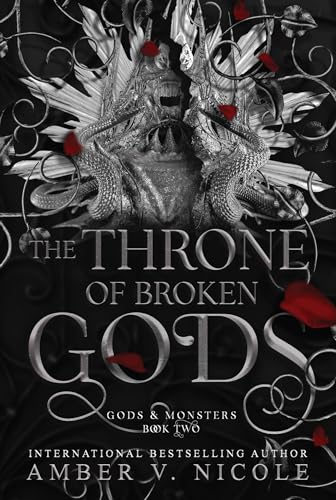
Front cover of The Throne of Broken Gods

Our review

The Throne of Broken Gods by Amber V. Nicole Review: Epic Romantasy Sequel With Emotional Heft

The Throne of Broken Gods is the second book in Amber V. Nicole's Gods & Monsters series, following immortal enemies-turned-lovers Dianna and Samkiel as forbidden devotion and world-ending grief push both toward catastrophe. The series has been described as a global phenomenon in the romantasy space, and this installment raises the emotional and mythological stakes considerably.

LuvemBooks Verdict

Best for

Devoted romantasy readers who are already invested in the Gods & Monsters saga and want a psychologically weighty, mythology-rich enemies-to-lovers continuation with genuine emotional stakes.

Worth it if

Worth reading if you have finished The Book of Azrael, crave a romantasy that treats grief and moral collapse with patience and psychological realism, and want cosmological stakes that make the central romance feel genuinely consequential.

Skip if

Skip it if you have not read the series opener — the novel is a direct continuation that presupposes deep familiarity with the Etherworld, its factions, and its characters — or if you prefer plot-driven epic fantasy without a strong romantic and emotional through-line.

Milesofcomfortandbooks.com commended Nicole for allowing characters to process grief in a way that felt natural and unhurried, with a slow, painful, and realistic journey through loss and healing. Reviews.readingtrolls.com noted that the book is filled with humour, devastating action, fast-paced sequences, romance, sexual tension, and betrayal, and praised Nicole for embedding details that appear random before revealing themselves as pivotal to the story.

Sources: milesofcomfortandbooks.com, reviews.readingtrolls.com, deardominique.co.uk, theartofreading.de
4.4from 38,777 Amazon ratings— reader ratings, not a LuvemBooks score

Ask LuvemBooks

Was this helpful?

The Throne of Broken Gods is the second installment in Amber V. Nicole's Gods & Monsters series, following immortal enemies-turned-lovers Dianna and Samkiel as grief, forbidden devotion, and cosmological catastrophe push both toward the point of no return. Readers already invested in the series will find a worthy and emotionally demanding escalation — one that handles grief with psychological patience and ties the romance structurally to the fate of entire realms. The key caveat: this is a direct continuation that presupposes full familiarity with The Book of Azrael, and its 784-page scope will feel most rewarding to devoted romantasy readers rather than newcomers to the genre.
Is it worth reading?
For readers already devoted to the Gods & Monsters series, The Throne of Broken Gods delivers the escalation the premise demands — raising both the emotional and mythological stakes considerably. Its standout quality is the handling of grief: Nicole allows Dianna and Samkiel to process loss in a slow, painful, and realistic way, resisting the genre's frequent impulse to prioritize momentum over interiority. The enemies-to-lovers dynamic is structurally tied to the fate of entire realms, not just personal drama, which gives the romance genuine tension across 784 pages. Those new to the series or outside the romantasy genre's core audience will find this a harder entry point.
Similar books
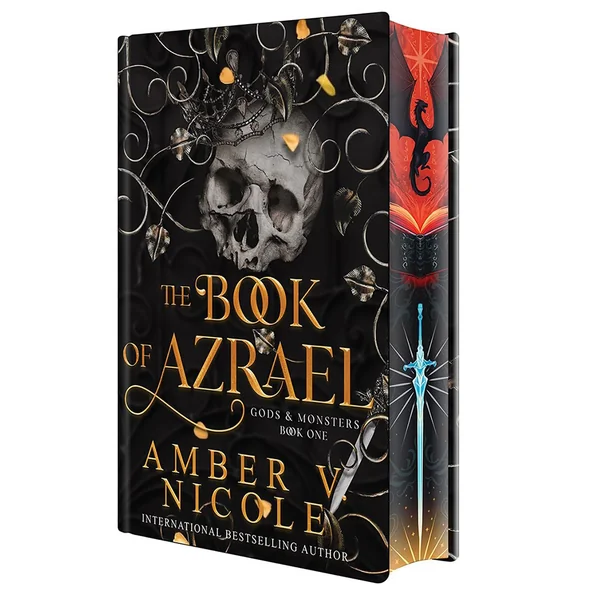
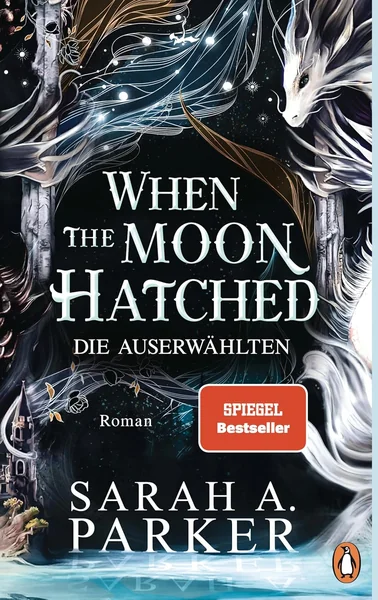
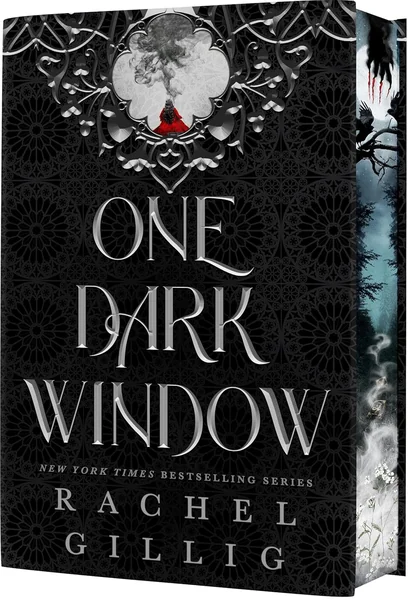
Readers drawn to The Throne of Broken Gods will find natural next reads in several titles. The Book of Azrael by Amber V. Nicole is the essential starting point — the series opener that establishes Dianna, Samkiel, and the Etherworld mythology. Kingdom of the Feared by Kerri Maniscalco offers a similarly dark romantasy blend of morally complex immortals and high-stakes forbidden romance. When the Moon Hatched by Sarah A. Parker and One Dark Window by Rachel Gillig both deliver the brooding, mythology-rich atmosphere that fans of Nicole's series tend to love. The Invisible Life of Addie LaRue by V.E. Schwab is another strong pick for readers drawn to immortality, forbidden devotion, and emotionally layered fantasy.
Who should read this?
The Throne of Broken Gods is squarely aimed at devoted romantasy readers who are already invested in the Gods & Monsters series — specifically those who have read The Book of Azrael and want to follow Dianna and Samkiel's escalating forbidden dynamic. Readers who enjoy morally gray heroines, enemies-to-lovers with genuine cosmological stakes, and emotionally patient handling of grief will find this installment especially rewarding. It is also a strong pick for fans of dark fantasy authors who weave elements of horror into their romantasy, given Nicole's fondness for morally complex characters and unsettling atmosphere. New readers and those outside the romantasy genre's core audience are better served by starting with The Book of Azrael.
About Amber V. Nicole
Amber V. Nicole is an international and USA Today bestselling author of dark fantasy novels, including the Gods and Monsters series. She incorporates elements of horror into her writing and has a fondness for morally gray characters. When not writing, she enjoys playing video games and obsessing over anime.
How does this compare to The Book of Azrael?
Where The Book of Azrael establishes the Etherworld, the Ig'Morruthen, and the foundational dynamic between Dianna and Samkiel, The Throne of Broken Gods raises the emotional and mythological stakes considerably. The second installment goes deeper into Dianna's psychological deterioration — her grief, her loss of humanity, and her conscious choice to embrace her monstrous side — making it a more emotionally demanding read. The forbidden-love dynamic, already central in book one, becomes structurally world-threatening here, with every step the two take toward each other carrying consequences measured in the fate of entire realms.
What are the main themes?
Grief is the novel's most prominent and deliberately handled theme — Nicole resists artificial resolution, instead tracing a slow, painful, and realistic journey through loss that gives the fantasy genuine psychological grounding. Alongside grief, the book explores the blurring of moral categories: villain and hero, monster and god, enemy and lover are all rendered unstable as Dianna consciously chooses darkness and Samkiel crosses cosmological lines to reach her. The duality captured in the publisher's framing — "for where there are Gods, there are also Monsters" — runs through the entire narrative, with the romance itself functioning as a structural engine for world-threatening consequence rather than personal drama alone.
Where should I start with this series?
The Gods & Monsters series should be read in order, beginning with The Book of Azrael. That first installment establishes the Etherworld's mythology, the nature of the Ig'Morruthen, and the central dynamic between Dianna and Samkiel — all of which The Throne of Broken Gods presupposes as known. Readers who skip The Book of Azrael will find themselves lacking crucial context about the world, its factions, and the relationship at the heart of the saga.
Summarize this book

Summarize this book

The Throne of Broken Gods is the second book in Amber V. Nicole's Gods & Monsters series, picking up with Dianna — an Ig'Morruthen described as the most terrifying of her kind — consumed by grief and choosing to embrace her monstrous nature, threatening to set the worlds alight. Standing opposite her is Samkiel, the World Ender, an immortal God who was once her sworn enemy and is now bound to her by a forbidden love that risks unraveling the realms themselves. Set against ancient battles in the Etherworld and wrenching betrayals, the novel tracks what happens when the lines between villains and heroes, enemies and lovers, and right and wrong blur irreparably. The book opens with a defining line: "When I burn this world to embers, and you paint me as the villain, remember, I really did try to be good… once."

Follow up

Where does this fit in the series?
How long is this book?
What's the tone like?

Synthesized from verified book data & published reviews · How we review

​

Press Enter to ask. Answers come from our editorial Q&A — start typing to see related questions.

Our Review

The Throne of Broken Gods earns its place as a worthy escalation of a romantasy saga that has already found a devoted global readership.

What the Book Is and What It Puts at Stake

The Throne of Broken Gods picks up the Gods & Monsters saga with Dianna, an Ig'Morruthen — a being whose true form is described as the most terrifying of all — consumed by grief and steadily losing her last grip on humanity. As the publisher's synopsis states, she decides to embrace her monstrous side and set the worlds alight. Standing across from her is Samkiel, the World Ender, an immortal God who was once the sworn enemy of Dianna and her kind. Their forbidden love does not simply complicate the plot — it threatens to unravel the realms themselves. Against a backdrop of ancient battles in the Etherworld and wrenching betrayals, the second installment tracks what happens when the lines between villains and heroes, enemies and lovers, right and wrong, begin to blur irreparably.

Scale and Ambition Within the Series

Arriving as book two of the Gods & Monsters series, The Throne of Broken Gods is a large-canvas continuation of a saga that publishers and booksellers have positioned alongside some of the genre's most prominent names. At 784 pages, the novel has the room to develop multiple threads simultaneously — the deterioration of Dianna's humanity, Samkiel's obsession, and a mythological conflict described as world-shattering in scope. The book opens with a line that telegraphs its protagonist's trajectory: "When I burn this world to embers, and you paint me as the villain, remember, I really did try to be good… once." That single sentence frames the emotional architecture of the entire novel — a fallen figure who is fully aware of her own fall.

Emotional Depth and the Treatment of Grief

One of the most discussed aspects of the novel among readers is its handling of grief. The blog milesofcomfortandbooks.com noted that the theme of grief is explored deeply, commending Nicole for allowing characters to process their emotions in a way that felt natural and unhurried, with no instant resolution — instead offering a slow, painful, and realistic journey through loss and healing. That commitment to unrushed emotional consequence is a notable structural choice in a genre that frequently prizes momentum over interiority. For readers who want their romantasy to carry genuine psychological weight alongside its mythological spectacle, this aspect of the novel represents a real distinguishing quality.

Strengths of the Romantasy Formula

The Throne of Broken Gods works squarely within the enemies-to-lovers romantasy tradition, but with a mythology — the Etherworld, the Ig'Morruthen, the figure of the World Ender — that gives the romance its particular texture and danger. The forbidden-love dynamic is not merely a trope here but a structural engine: because Samkiel and Dianna are cosmologically opposed, every step toward each other carries a consequence measured in the fate of realms. The publisher's framing — "for where there are Gods, there are also Monsters" — captures the central duality that Nicole sustains across the narrative. That the book manages to keep both the mythological conflict and the romantic relationship at high tension across such an expansive page count is, by design, its core structural challenge.

Who Will Connect With This Book — and Where It May Challenge

Readers who begin with The Throne of Broken Gods without having read The Book of Azrael (the series opener) will find themselves at a disadvantage — the novel is a direct continuation that presupposes familiarity with the world, its factions, and its central relationship. The 784-page length is a commitment that suits devoted series readers but may feel daunting to those new to Nicole's work. Additionally, the book leans into romantasy conventions — morally complex immortals, a collapsing world as romantic backdrop, and a heroine choosing darkness — that readers who prefer grounded fantasy or plot-driven epic fiction without a strong romantic through-line may find less compelling. Those who are already invested in Dianna and Samkiel's dynamic, however, will find this installment delivers the escalation the premise demands.

Sources & Further Reading

The key facts and claims in this review are grounded in the retrieved, verified sources listed below.

  1. Cited in this review
  2. 1
  3. 2
  4. 3
  5. Further reading
  6. 4
  7. 5
  8. 6
  9. 7
  10. 8
  11. 9
  12. 10
  13. 11
  14. 12
  15. 13
  16. 14
  17. 15

Age & Reading Level

Recommended age

Ages 16+

Reading level

Adult

Content to know about

grief and psychological deterioration
morally gray violence and world-threatening destruction
horror elements

Best for: Adults / mature 16+ — dark romantasy with horror elements, psychological grief, moral ambiguity, and a heroine consciously embracing monstrous darkness.

Skip if you prefer grounded epic fantasy or plot-driven fiction without a strong romantic through-line.

Amber V. Nicole on The Throne of Broken Gods

Author Amber V. Nicole sits down to discuss character motivations and pivotal narrative decisions across The Book of Azrael and The Throne of Broken Gods.

Uploaded by Our Unofficial Bookclub, 2025 · Watch on YouTube

More from this interview on Amber V. Nicole's page →

Justifying Dianna's killings in book two

Nicole asserts that Dianna was completely justified in hunting down everyone on her hit list in the second book, as she was targeting individuals directly complicit in harming those she loved.

From our readers

Reader reviews

No reader reviews yet

Read it? Be the first to say what you thought.

Books like The Throne of Broken Gods

Curated picks for readers who enjoyed The Throne of Broken Gods, with our reasoning for each match.